


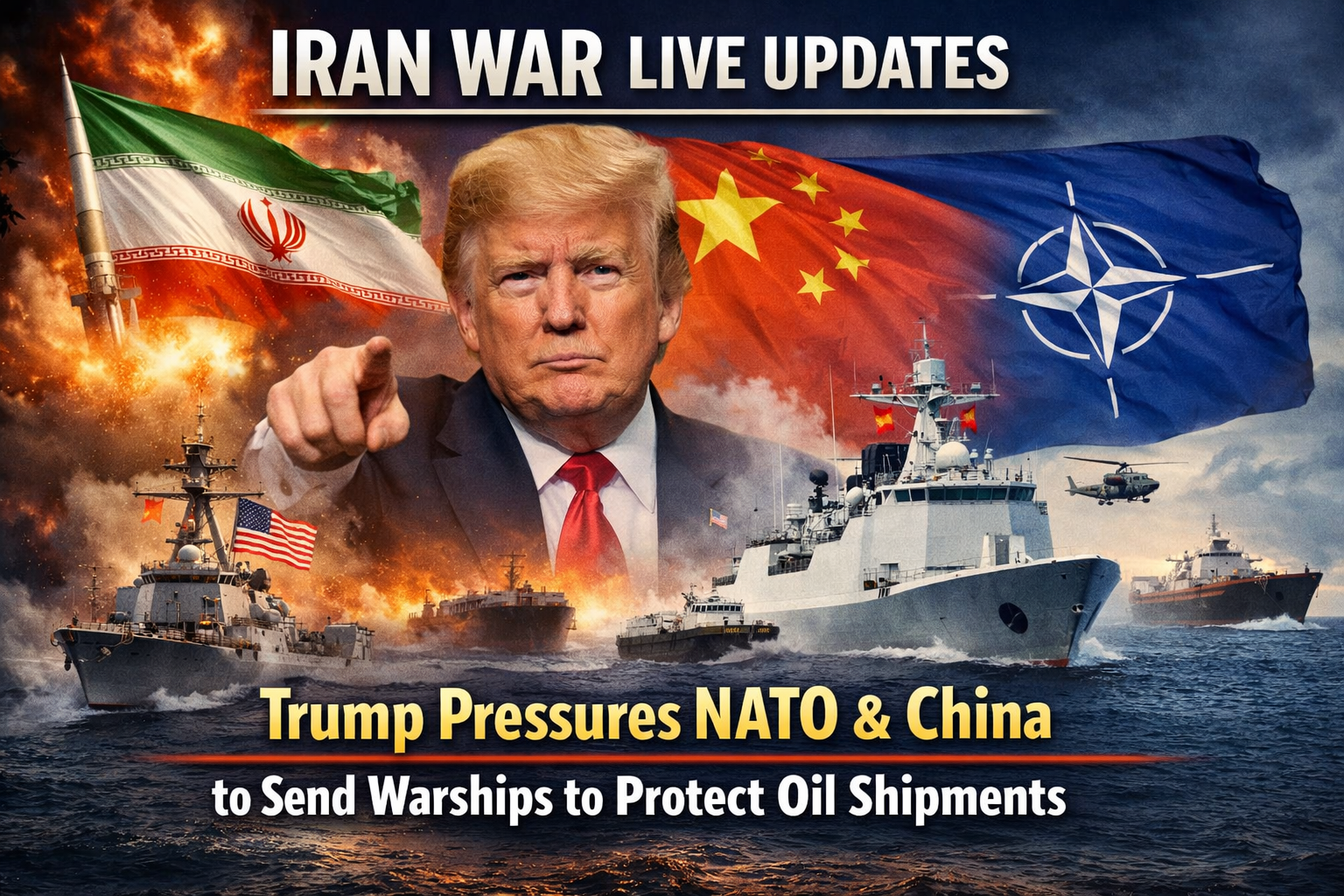
The global political situation has become tense as the Iran war continues to escalate, creating serious concerns about global energy supply and international security. One of the biggest developments is the growing pressure from former U.S. President Donald Trump on NATO allies and China to deploy warships in the Persian Gulf to protect oil shipments.
The conflict has significantly affected the Strait of Hormuz, one of the world’s most important shipping routes for oil and gas. With attacks, military operations, and rising oil prices, countries around the world are closely watching how the situation develops.
This article provides live updates, background information, and analysis of the ongoing Iran war and the global response.
Background of the Iran War
The latest crisis started after rising tensions between Iran, the United States, and Israel. Military strikes and counterattacks triggered a broader regional conflict that quickly spread across the Middle East.
Following joint strikes by the U.S. and Israel, Iran responded with missile and drone attacks targeting military bases and infrastructure across the region. These actions intensified the conflict and caused severe disruption to global shipping routes.
As tensions escalated, the Strait of Hormuz became the center of the crisis. Iran warned that ships belonging to the United States and its allies could be blocked from passing through the waterway.
Why the Strait of Hormuz Is So Important
The Strait of Hormuz is a narrow waterway between Iran and Oman that connects the Persian Gulf with the Arabian Sea.
This route is extremely important for global trade because:
- Around 20% of the world’s oil supply passes through it.
- Millions of barrels of crude oil move through the strait every day.
- Many Asian countries depend heavily on oil shipped through this route.
If this route is blocked or disrupted, it can quickly cause global energy shortages and rising fuel prices.
Due to the current conflict, shipping traffic in the region has sharply declined, and many vessels are waiting outside the strait to avoid attacks.
Trump Pressures NATO Allies for Military Support
In recent developments, Donald Trump has strongly urged NATO allies and major global powers to contribute military support to protect the Strait of Hormuz.
Trump warned that NATO could face a “very bad future” if allies do not help reopen the vital shipping route.
According to reports, the United States is asking several countries to send:
- Naval warships
- Minesweepers
- Air defense systems
- Military escorts for oil tankers
The goal is to create a multinational naval coalition to ensure that oil shipments can move safely through the Gulf region.
Trump has argued that countries benefiting from oil shipments should also share responsibility for protecting the route.
China’s Role in the Crisis
China plays a crucial role in this situation because it is one of the largest importers of Middle Eastern oil.
A significant portion of China’s energy supply comes through the Strait of Hormuz. Because of this, Trump has also pressured China to send warships to help secure the shipping lanes.
Reports suggest that the U.S. government wants China to join a coalition aimed at protecting commercial vessels and preventing further disruption of global energy supplies.
However, China has been cautious in responding to these requests, focusing more on diplomatic solutions rather than direct military involvement.
Rising Oil Prices and Global Economic Impact
One of the immediate consequences of the conflict is the sharp increase in global oil prices.
As tensions grew and shipping routes became unsafe, oil prices surged past $100 per barrel, causing concern among global markets.
Higher oil prices affect:
- Transportation costs
- Fuel prices for consumers
- Global inflation
- Energy security
Countries that rely heavily on imported oil are particularly vulnerable to such disruptions.
Military Activity in the Persian Gulf
The Persian Gulf has become a major military hotspot during the conflict.
Several developments have increased tensions:
- U.S. and allied airstrikes on Iranian infrastructure
- Iranian missile and drone attacks across the region
- Naval deployments by multiple countries
- Threats to commercial shipping vessels
Some ships have already been damaged or forced to abandon their routes due to attacks in the region.
Because of these risks, many shipping companies temporarily suspended operations in the Strait of Hormuz.
International Response to the Crisis
Different countries have reacted in different ways to the crisis.
Some NATO members are considering sending military support, while others are hesitant to become directly involved in the conflict.
For example:
- Japan has said it is still evaluating the situation before sending naval forces.
- European nations are discussing alternative ways to protect shipping routes.
- Gulf countries are strengthening their own security measures.
The international community is also exploring diplomatic efforts to reduce tensions and prevent the conflict from expanding further.
What Could Happen Next?
Experts believe several possible scenarios could unfold in the coming weeks.
1. Multinational Naval Coalition
Countries may form a joint naval force to escort oil tankers and protect shipping lanes.
2. Continued Military Escalation
If attacks continue, the conflict could expand to other parts of the Middle East.
3. Diplomatic Negotiations
International mediators could attempt to negotiate a ceasefire between the parties.
4. Global Energy Crisis
If the Strait of Hormuz remains disrupted, the world could face a major energy supply crisis.
Global Security Concerns
The Iran war has raised serious concerns about global stability.
The conflict involves several powerful countries and important trade routes. If tensions continue to grow, the situation could affect not only the Middle East but also the global economy.
Many analysts believe that protecting the Strait of Hormuz will remain a top priority for world powers in the coming months.
Conclusion
The ongoing Iran war has created one of the most serious geopolitical crises in recent years. With attacks, military deployments, and disrupted oil shipments, the situation remains highly volatile.
Donald Trump’s call for NATO allies and China to send warships highlights the urgency of protecting global energy routes. As tensions continue, the world is watching closely to see whether diplomacy or military action will determine the future of the region.
The coming weeks will be crucial in deciding whether the crisis escalates further or moves toward a peaceful resolution.
FAQs
1. Why is the Strait of Hormuz important?
The Strait of Hormuz is a key global shipping route through which nearly 20% of the world’s oil supply passes. Any disruption there can affect global energy markets.
2. Why is Trump asking NATO allies to send warships?
Trump believes countries benefiting from oil shipments through the Gulf should help protect the shipping routes by sending naval forces.
3. How has the Iran war affected oil prices?
The conflict has caused oil prices to rise sharply because of fears that the Strait of Hormuz could remain blocked.
4. Is China involved in the military response?
China has been pressured to join efforts to protect oil shipments but has taken a cautious approach so far.
5. Could this conflict lead to a larger war?
Experts warn that if tensions escalate further, the conflict could involve more countries and affect global security.
