


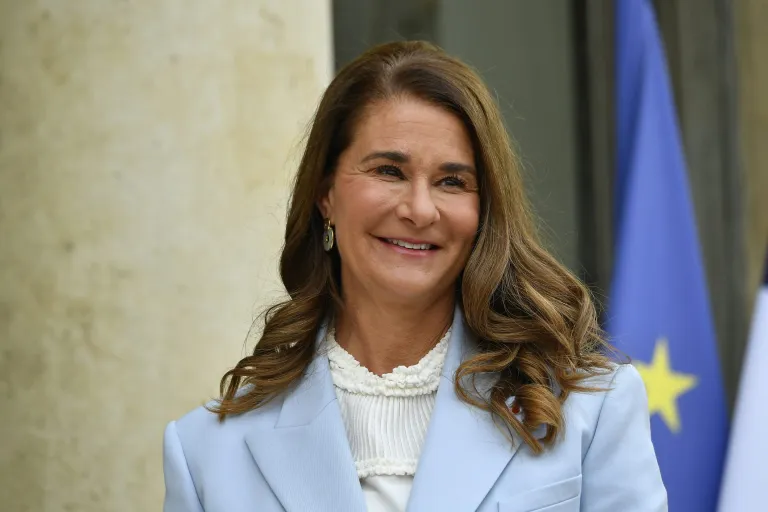
Long before she became one of the world’s most influential philanthropists, Melinda French Gates was a young computer science graduate trying to decide where to begin her professional life. The decision that ultimately led her to Microsoft—where she would meet her future husband and shape a pivotal chapter of her career—was not driven by a confident yes from a dream employer. Instead, it was sparked by a surprising dismissal from another corporate giant.
That company was IBM, and the moment would stay with Gates for decades.
A Promising Start—and an Unexpected Roadblock
In the mid-1980s, Melinda French was finishing her MBA at Duke University, already armed with a bachelor’s degree in computer science and economics. She was exactly the kind of candidate top technology firms sought: technically fluent, business-minded, and ambitious. IBM, then the unquestioned titan of enterprise computing, recruited her aggressively and extended a job offer.
But when French informed an IBM hiring manager that she was also considering a role at a much smaller and younger company—Microsoft—the response stunned her.
According to Gates, the IBM manager strongly advised her to turn down Microsoft’s offer. The reasoning was blunt: Microsoft was viewed as a risky, unproven firm, unlikely to match IBM’s prestige, stability, or long-term prospects. Accepting a job there, the manager implied, would be a career mistake.
“It dumbfounded me,” Gates later recalled. She had expected encouragement or at least neutral guidance—not a dismissal of her curiosity about a rising software company that was already making waves with its operating systems.
Seeing Opportunity Where Others Saw Risk
Rather than discouraging her, the conversation had the opposite effect. Gates began to reflect on why IBM’s warning bothered her so deeply. She realized it wasn’t just about Microsoft—it was about autonomy, growth, and being part of something still taking shape.
Microsoft, at the time, was known for its intense culture, rapid iteration, and willingness to give young employees real responsibility. While IBM offered structure and certainty, Microsoft offered possibility. Gates recognized that joining a smaller company could mean broader exposure, faster learning, and a greater chance to influence outcomes.
In retrospect, the hiring manager’s advice clarified her priorities. If a company dismissed another firm so readily—especially one that was innovating aggressively—perhaps it was not the environment she wanted.
She turned down IBM’s offer and accepted Microsoft’s.
Building a Career Inside Microsoft
Gates joined Microsoft in 1987 as a product manager, working on multimedia products at a time when the concept was still emerging. The role demanded technical fluency and strategic thinking—skills she had honed through her education and internships.
At Microsoft, Gates quickly distinguished herself. She worked on products such as Encarta, one of the earliest digital encyclopedias, helping bridge the gap between software engineering and consumer usability. Her responsibilities expanded as the company grew, and she became known for her rigor, clarity, and ability to manage complex initiatives.
It was also at Microsoft that she met Bill Gates, the company’s co-founder and CEO. Their relationship would later become a defining part of her public identity, but at the time, her professional path stood firmly on its own merits.
A Lesson in Listening to Instinct
Looking back, Gates has often framed the IBM episode as an early lesson in trusting her instincts—even when authority figures suggest otherwise. The advice she received wasn’t malicious; it reflected conventional wisdom. IBM was safe. Microsoft was not.
Yet history proved how flawed that assumption was. Microsoft went on to define personal computing for decades, while IBM gradually shifted away from consumer-facing dominance. For Gates, the decision shaped not only her career but also her worldview.
The experience reinforced the idea that innovation rarely looks safe in the moment. Transformational opportunities often come disguised as risk, uncertainty, or even rejection.
From Career Turning Point to Global Impact
Gates eventually left Microsoft in the mid-1990s and went on to co-found the Bill & Melinda Gates Foundation, later continuing her philanthropic work independently. Still, the themes from that early decision echo throughout her life’s work: questioning entrenched systems, backing undervalued ideas, and believing that change often begins at the margins.
The IBM hiring manager’s comment, meant to steer her away from danger, instead pushed her toward one of the most consequential choices of her life.
What “dumbfounded” Melinda French Gates in her twenties ultimately empowered her. By refusing to let conventional thinking dictate her future, she positioned herself at the center of technological, cultural, and philanthropic transformation—proving that sometimes, the best career advice is knowing when not to take it.
