


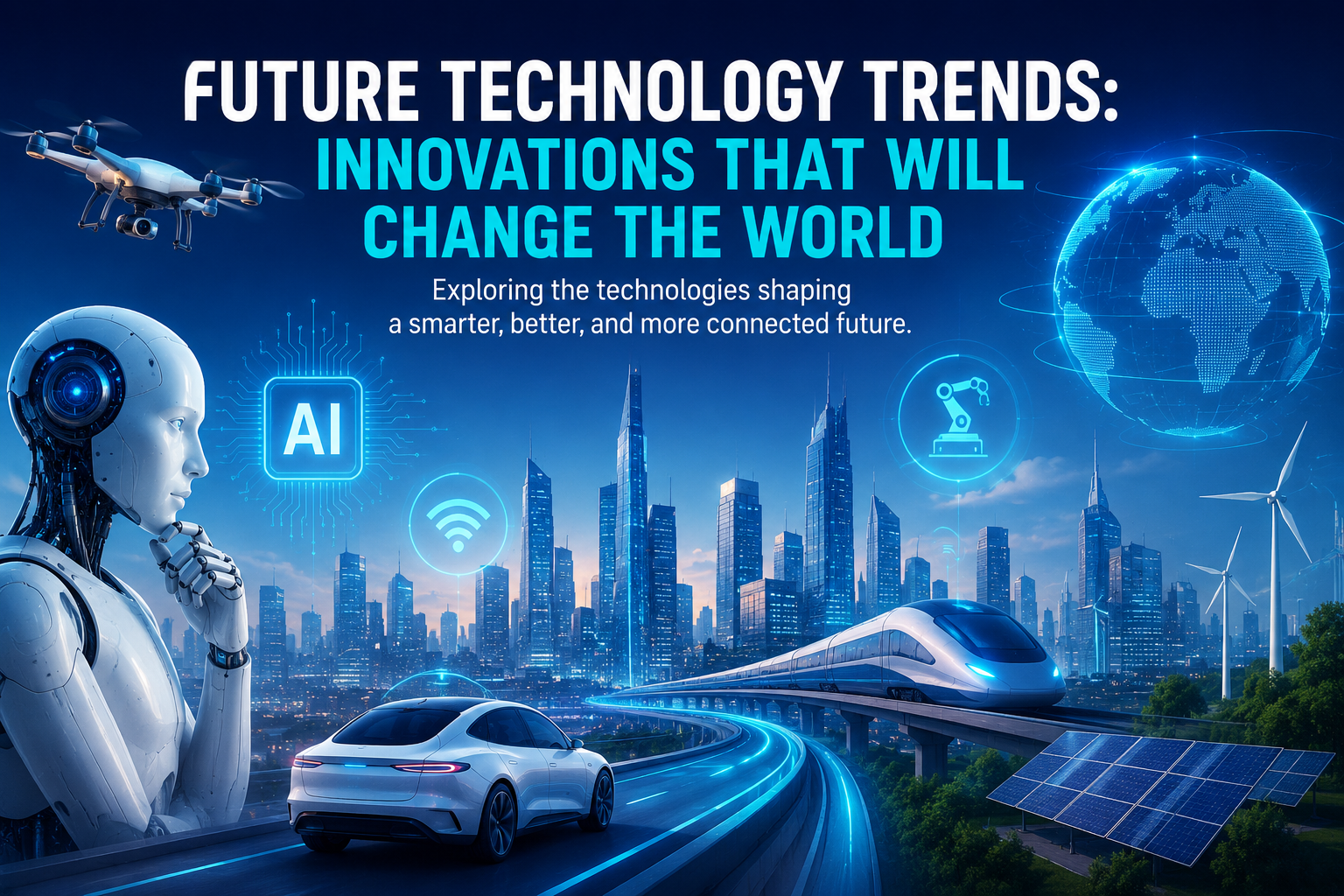
Technology is evolving faster than ever before. Every year, new inventions and digital solutions change the way we live, work, communicate, and learn. From artificial intelligence to smart cities, future technologies are expected to make life more efficient, connected, and innovative.
In this guide, we will explore the most important future technology trends and how they may transform our world in the coming years.
What Are Future Technology Trends?
Future technology trends are new and emerging innovations that have the potential to significantly impact society, businesses, and everyday life. These technologies are designed to solve problems, improve productivity, and create new opportunities across different industries.
Many of these innovations are already being developed and tested today, while others are expected to become more common in the near future.
Artificial Intelligence (AI) Will Become More Powerful
Artificial Intelligence (AI) is one of the most important technologies shaping the future. AI systems can analyze data, automate tasks, answer questions, and even create content.
How AI Will Change the World
- Smarter virtual assistants
- Faster healthcare diagnosis
- Personalized education
- Improved customer service
- Better business decision-making
AI is expected to become a major part of daily life, helping people save time and increase productivity.
Robotics Will Transform Industries
Robots are becoming more advanced and capable of performing complex tasks. In the future, robots may work alongside humans in factories, hospitals, warehouses, and even homes.
Benefits of Robotics
- Increased efficiency
- Reduced human error
- Improved workplace safety
- Faster production processes
Robots can help businesses reduce costs while improving service quality and productivity.
The Growth of Smart Cities
Smart cities use technology to improve urban living. Sensors, connected devices, and data analytics help manage traffic, energy use, public transportation, and public safety.
Features of Smart Cities
- Smart traffic systems
- Energy-efficient buildings
- Digital public services
- Improved waste management
- Better environmental monitoring
As urban populations grow, smart cities may help create cleaner, safer, and more sustainable communities.
The Expansion of the Internet of Things (IoT)
The Internet of Things (IoT) refers to devices connected through the internet that can collect and share data.
Examples include:
- Smart home devices
- Smart watches
- Connected vehicles
- Smart appliances
In the future, IoT technology will make homes, workplaces, and cities more intelligent and efficient.
Quantum Computing Could Revolutionize Problem Solving
Quantum computing is a new type of computing technology that can process complex calculations much faster than traditional computers.
Potential Applications
- Medical research
- Climate modeling
- Financial analysis
- Cybersecurity
- Scientific discoveries
Although still developing, quantum computing has the potential to solve problems that are currently impossible for standard computers.
Virtual Reality (VR) and Augmented Reality (AR)
Virtual Reality and Augmented Reality are changing the way people experience digital content.
Future Uses of VR and AR
- Interactive education
- Virtual meetings
- Gaming experiences
- Medical training
- Real estate tours
These technologies may create more immersive and engaging experiences for both businesses and consumers.
5G and Advanced Connectivity
The rollout of 5G networks is improving internet speed and connectivity around the world.
Benefits of 5G Technology
- Faster downloads
- Better video streaming
- Improved remote work
- Enhanced online gaming
- Support for smart devices
Future communication networks will make digital services more reliable and accessible.
Sustainable and Green Technology
Environmental concerns are encouraging the development of eco-friendly technologies.
Examples of Green Technology
- Renewable energy systems
- Electric vehicles
- Smart energy grids
- Energy-efficient buildings
- Sustainable manufacturing
These innovations can help reduce pollution and support a healthier planet.
Biotechnology and Healthcare Innovation
Technology is transforming healthcare through better treatments, advanced diagnostics, and personalized medicine.
Future Healthcare Technologies
- AI-powered medical tools
- Wearable health devices
- Gene editing
- Remote healthcare services
- Advanced medical imaging
These developments may improve patient care and help people live healthier lives.
Autonomous Vehicles and Smart Transportation
Self-driving vehicles are becoming more advanced every year. Future transportation systems may rely heavily on automation and smart technology.
Potential Benefits
- Reduced traffic accidents
- Lower transportation costs
- Improved mobility
- Better traffic management
Autonomous vehicles could change how people travel and move goods around the world.
Challenges of Future Technologies
While technology offers many benefits, it also brings challenges.
Common Concerns
- Data privacy
- Cybersecurity threats
- Job displacement through automation
- Ethical concerns regarding AI
- Digital inequality
Governments, businesses, and technology experts must work together to ensure these innovations are used responsibly.
Conclusion
Future technology trends are expected to reshape nearly every aspect of human life. Artificial intelligence, robotics, smart cities, quantum computing, biotechnology, and sustainable innovations will play a major role in solving global challenges and creating new opportunities.
As these technologies continue to develop, individuals and businesses that stay informed and adapt to change will be better prepared for the future. Understanding these innovations today can help us take advantage of the exciting possibilities that tomorrow’s world will offer.
Frequently Asked Questions (FAQs)
1. What is the most important future technology?
Artificial Intelligence (AI) is considered one of the most important future technologies because it can improve productivity, automation, and decision-making across many industries.
2. How will technology change everyday life?
Technology will make daily activities easier through smart devices, faster communication, better healthcare, and more personalized services.
3. What are smart cities?
Smart cities use connected technologies and data to improve transportation, energy management, public services, and overall quality of life.
4. Why is quantum computing important?
Quantum computing can solve highly complex problems much faster than traditional computers, helping industries such as healthcare, finance, and science.
5. What skills are important for the future technology era?
Digital literacy, data analysis, cybersecurity awareness, AI knowledge, problem-solving, and adaptability will be valuable skills in the future technology landscape.
