


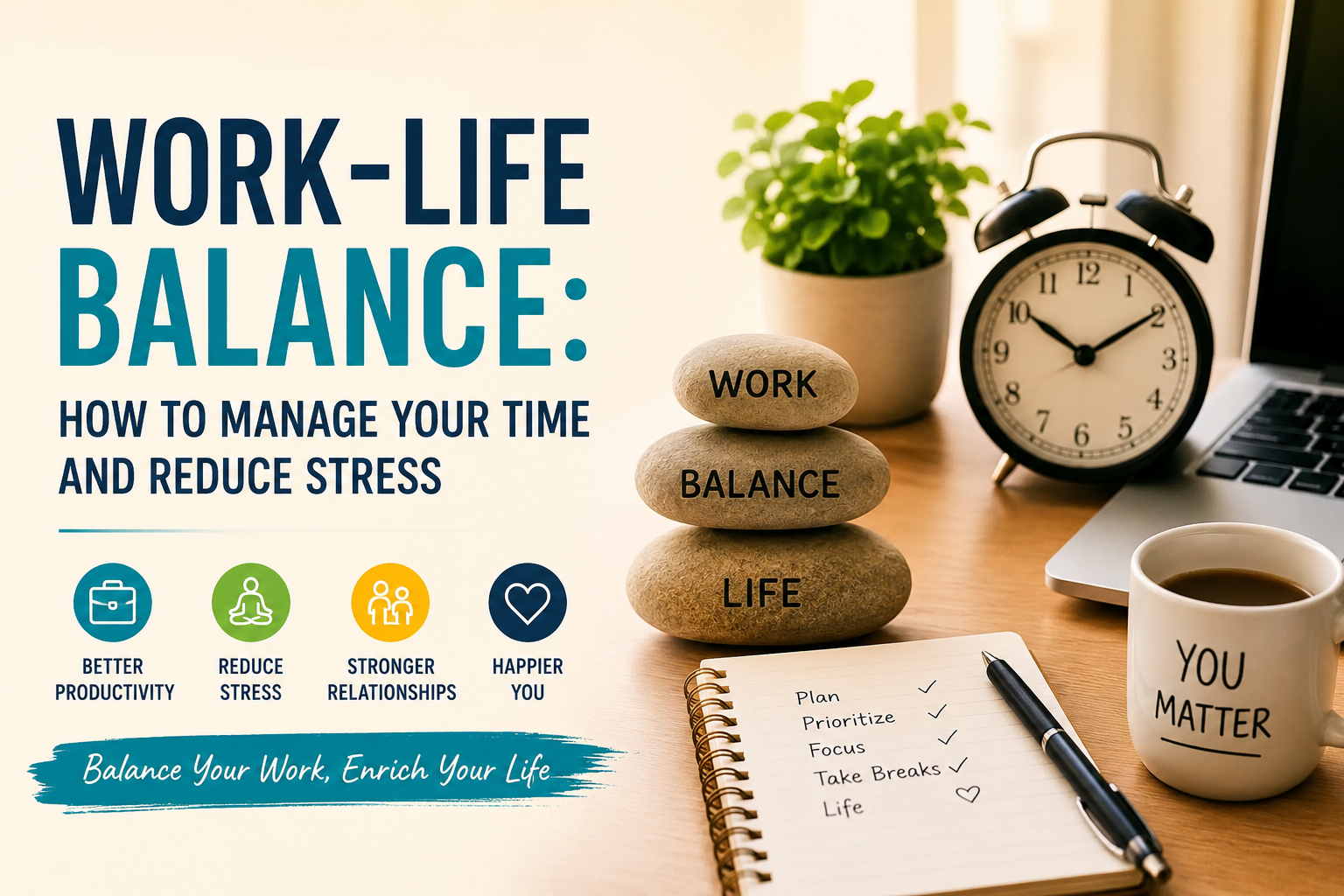
In today’s busy world, many people struggle to balance work and personal life. Long working hours, family responsibilities, and daily challenges can make life stressful. When work takes up too much time, it can affect your health, relationships, and happiness. This is why maintaining a healthy work-life balance is important.
Work-life balance means giving enough time to both your professional and personal life. It helps you stay productive at work while also enjoying time with family, friends, and yourself. In this guide, you will learn simple ways to manage your time better and reduce stress for a healthier and happier life.
What Is Work-Life Balance?
Work-life balance is the ability to divide your time and energy between work and personal activities. It does not mean spending equal hours on both. Instead, it means creating a balance that allows you to meet your work responsibilities while still having time for relaxation, hobbies, and loved ones.
A good work-life balance can improve your mental health, increase productivity, and help you enjoy life more.
Why Is Work-Life Balance Important?
Having a healthy balance between work and personal life offers many benefits:
Better Mental Health
Too much work can lead to stress, anxiety, and burnout. Taking time for yourself helps improve your mood and mental well-being.
Improved Physical Health
When you have time to exercise, sleep properly, and eat healthy meals, your overall health improves.
Stronger Relationships
Spending quality time with family and friends helps build stronger connections and creates happy memories.
Increased Productivity
People who take regular breaks and maintain balance often perform better at work than those who work constantly without rest.
Greater Happiness
A balanced lifestyle helps you enjoy life and feel more satisfied with your daily routine.
Common Causes of Poor Work-Life Balance
Many people struggle with work-life balance because of:
- Long working hours
- Excessive workload
- Poor time management
- Constant phone and email notifications
- Lack of boundaries between work and personal life
- Working from home without a schedule
Recognizing these issues is the first step toward creating positive change.
Effective Time Management Tips
Managing your time properly is one of the best ways to improve work-life balance.
Create a Daily Schedule
Plan your day in advance. Make a list of important tasks and prioritize them. A schedule helps you stay organized and focused.
Set Clear Goals
Having clear daily and weekly goals can prevent confusion and save time. Focus on completing the most important tasks first.
Avoid Multitasking
Trying to do multiple things at once can reduce productivity. Focus on one task at a time for better results.
Use Time Blocks
Divide your day into specific time blocks for work, meetings, breaks, and personal activities. This method helps you stay on track.
Learn to Say No
Do not take on more responsibilities than you can handle. Saying no when necessary protects your time and reduces stress.
Ways to Reduce Stress
Stress is a common problem for working professionals. Fortunately, there are simple ways to manage it.
Take Regular Breaks
Short breaks during the day help refresh your mind and improve concentration.
Exercise Regularly
Physical activity releases endorphins that help reduce stress and improve mood. Even a 30-minute walk can make a difference.
Get Enough Sleep
Lack of sleep can increase stress levels and reduce productivity. Aim for 7–9 hours of sleep each night.
Practice Mindfulness
Meditation, deep breathing exercises, and mindfulness techniques can help calm your mind and reduce anxiety.
Limit Screen Time
Constant exposure to screens and social media can increase stress. Set limits and take digital breaks whenever possible.
Setting Healthy Boundaries
Healthy boundaries are essential for maintaining work-life balance.
Separate Work and Personal Time
Avoid checking work emails or taking work calls during your personal time whenever possible.
Create a Dedicated Workspace
If you work from home, set up a specific workspace to separate work from your personal life.
Communicate Your Limits
Let colleagues and managers know your availability and working hours to avoid unnecessary interruptions.
Make Time for Yourself
Many people focus so much on work that they forget to care for themselves. Self-care is important for maintaining balance.
You can:
- Read a book
- Spend time with family
- Pursue hobbies
- Travel
- Listen to music
- Practice yoga
Doing activities you enjoy helps recharge your energy and improve your overall well-being.
Conclusion
Achieving work-life balance is not about perfection. It is about making small changes that help you manage your responsibilities while still enjoying life. By improving your time management skills, setting healthy boundaries, and practicing stress-reduction techniques, you can create a healthier and more fulfilling lifestyle.
Remember, success is not only about career growth. True success includes good health, strong relationships, and personal happiness. Start making small changes today, and you will soon experience the benefits of a balanced life.
Frequently Asked Questions (FAQs)
1. What is the main purpose of work-life balance?
The main purpose is to maintain a healthy balance between work responsibilities and personal life to improve well-being and happiness.
2. How can I improve my work-life balance?
You can improve it by managing your time effectively, setting boundaries, taking breaks, and making time for personal activities.
3. Why does poor work-life balance cause stress?
When work takes too much time and energy, it leaves little room for rest, family, and self-care, leading to stress and burnout.
4. How many hours should I work each day?
The ideal number varies by profession, but it is important to work reasonable hours while ensuring enough time for rest and personal life.
5. Can work-life balance improve productivity?
Yes. Employees who maintain a healthy balance are often more focused, motivated, and productive at work.
