


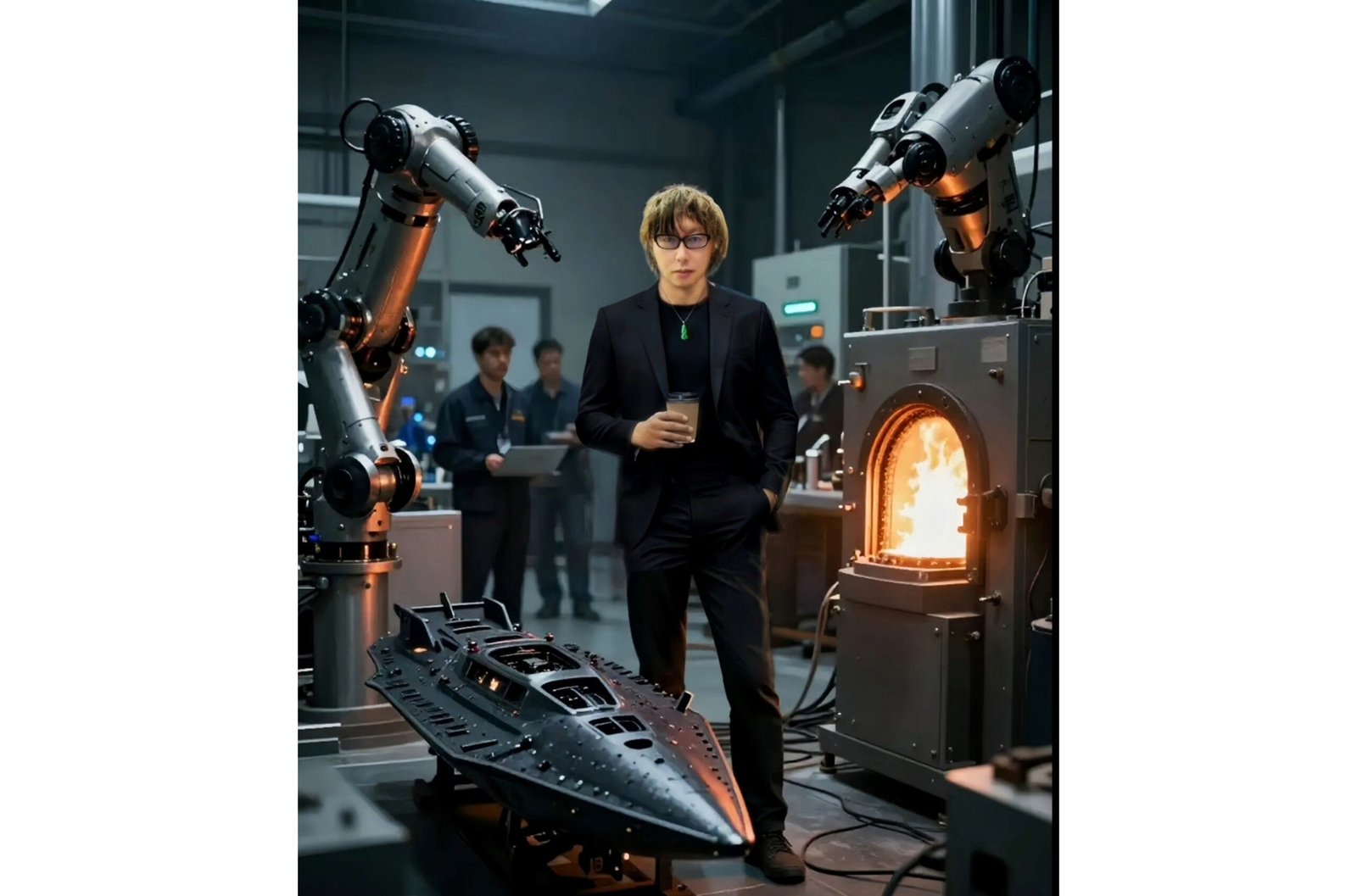
From cybersecurity and materials science to photonic computing, his work reflects an unconventional approach to tech and innovation.
Among the many professionals who have made a mark in their niches, those who stand out pursue ingenious ideas and walk unconventional paths. It’s thus imperative to shed more light on the life of one such incredible and versatile talent, Dr. Ko-Cheng Fang.
The boundaries between art and science are often treated as distinct. One is associated with creativity and expression, while the other is driven by measurement, experimentation and technical precision. However, in the case of Dr. Ko-Cheng Fang, the two have remained closely connected throughout his professional journey. His work spans several areas of tech, including cybersecurity, materials science, semiconductor research, biotechnology, and photonic computing. Alongside these fields, he has maintained a longstanding interest in painting and creative expression, which has also carried into his work with advanced materials and fashion.

Growing up around paintings, sculptures and other forms of creative expression, he developed an appreciation for visual composition, while also developing an appreciation for precision and technical problem-solving. Some of his earlier work focused on digital infrastructure and information security.

He developed patented technologies related to cloud storage systems and programmable password security. The supplied information states that the United States Department of Homeland Security later developed some of these technologies. The work reflects a period when cloud computing and digital security were becoming increasingly important to the development of modern technology infrastructure. Materials science represents another critical part of his extensive work. One development associated with his research is lab-grown Imperial Green jadeite. Creating a lab-grown alternative also involves addressing the material’s physical and chemical characteristics.

The research has also raised questions about the availability of natural jadeite and the environmental implications of mining. Laboratory production offers a different route for creating the material, although its properties, commercial acceptance, and sustainability implications depend on the specific production process. The work subsequently moved beyond the lab and into design. LongServing Technology has introduced jadeite into luxury products, including a handbag collection incorporating the lab-grown material.

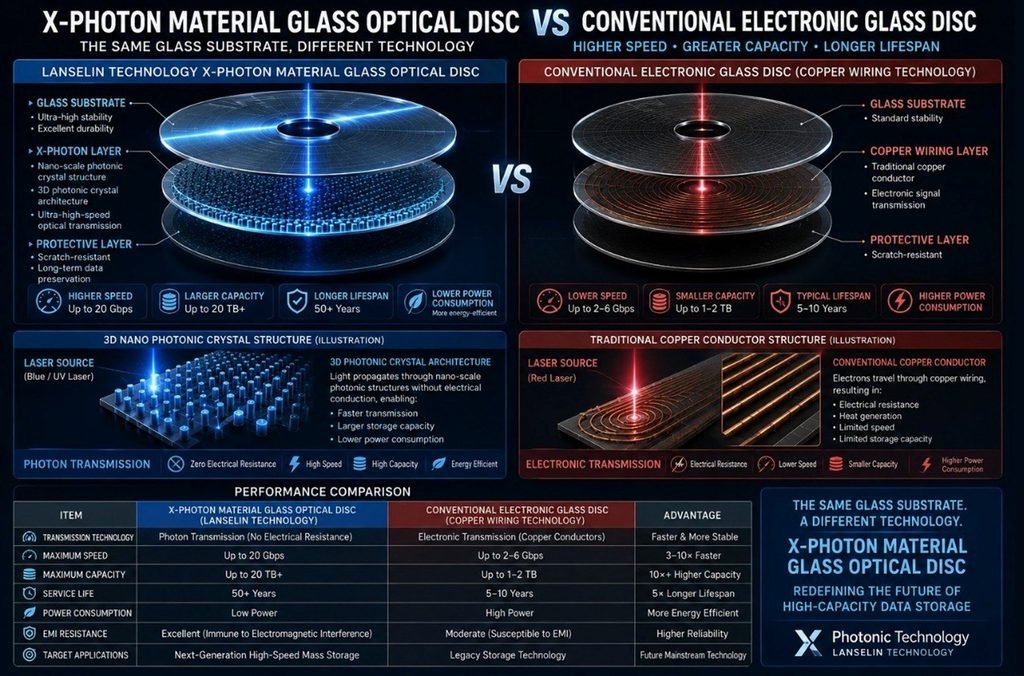
Another major area of interest is photonic computing, where light is used to transmit or process information rather than relying exclusively on electrical signals. Fang’s work in this field centres on photonic quantum chips and a material referred to as “X-Photon.” The material can emit light at a wavelength of approximately two nanometres and is being explored for nanoscale photonic applications. The underlying idea reflects a broader area of research in computing, such as reducing the limitations created by electrical interconnects and conventional electronic processing. Photonics can potentially move information using light, reducing certain energy losses and improving data-transfer efficiency.
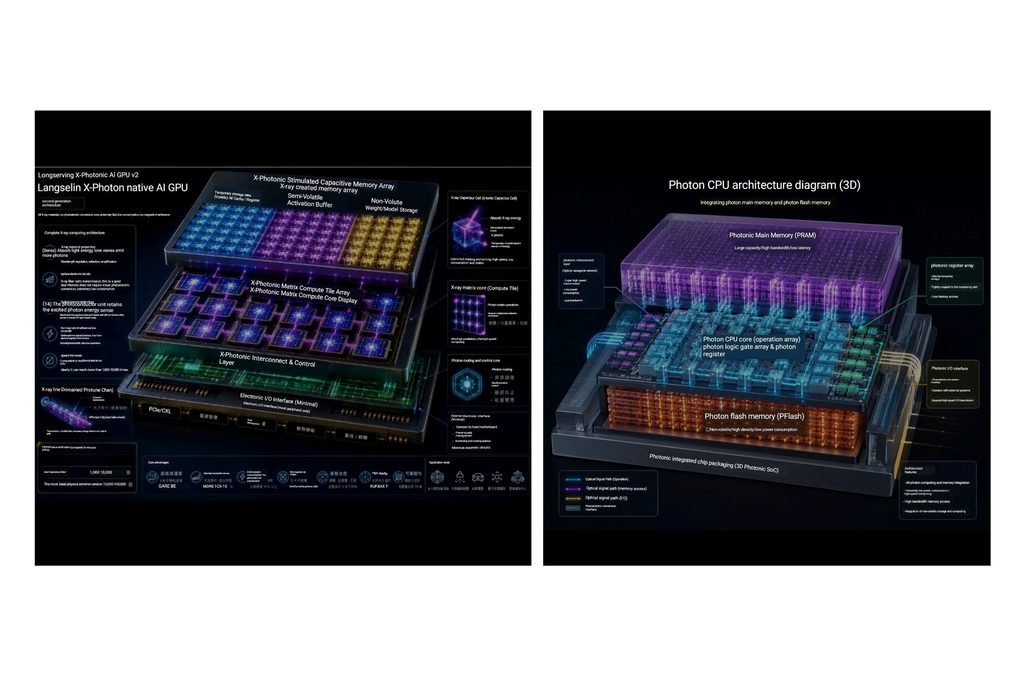
Another area of research is photonic memory. Conventional computing systems frequently move information between optical and electronic components, creating additional conversion steps. Photonic memory aims to retain information in the optical domain for longer periods, potentially reducing some of those conversions. Combining photonic chips with photonic memory could eventually deliver processing speeds significantly beyond current electronic CPUs. The concept remains part of a larger global research effort into optical computing, quantum technologies and new semiconductor architectures.
Dr. Ko-Cheng Fang’s work also focuses on semiconductor manufacturing. His research involving seven-nanometre photomask fabrication reflects an interest in the processes used to create increasingly compact semiconductor components. Photomasks are essential to semiconductor manufacturing because they transfer circuit patterns onto wafers during lithography. Alongside semiconductor research, his biotech work explores potential anti-cancer applications. The research analyses bioactive compounds derived from natural sources and their possible use in approaches designed to target cancer cells.

In 2026, LongServing Technology entered the fashion and lifestyle segment through a boutique collection inspired by his original paintings. The collection includes apparel, footwear and handbags, while the jadeite handbags combine the company’s materials research with conventional luxury craftsmanship. LongServing Technology is also pursuing a global IPO and seeking international underwriting and advisory partners.
The most unique feature of his journey is the attempt to connect disciplines that are rarely discussed together and use that intersection as the starting point to further experimentation.
