


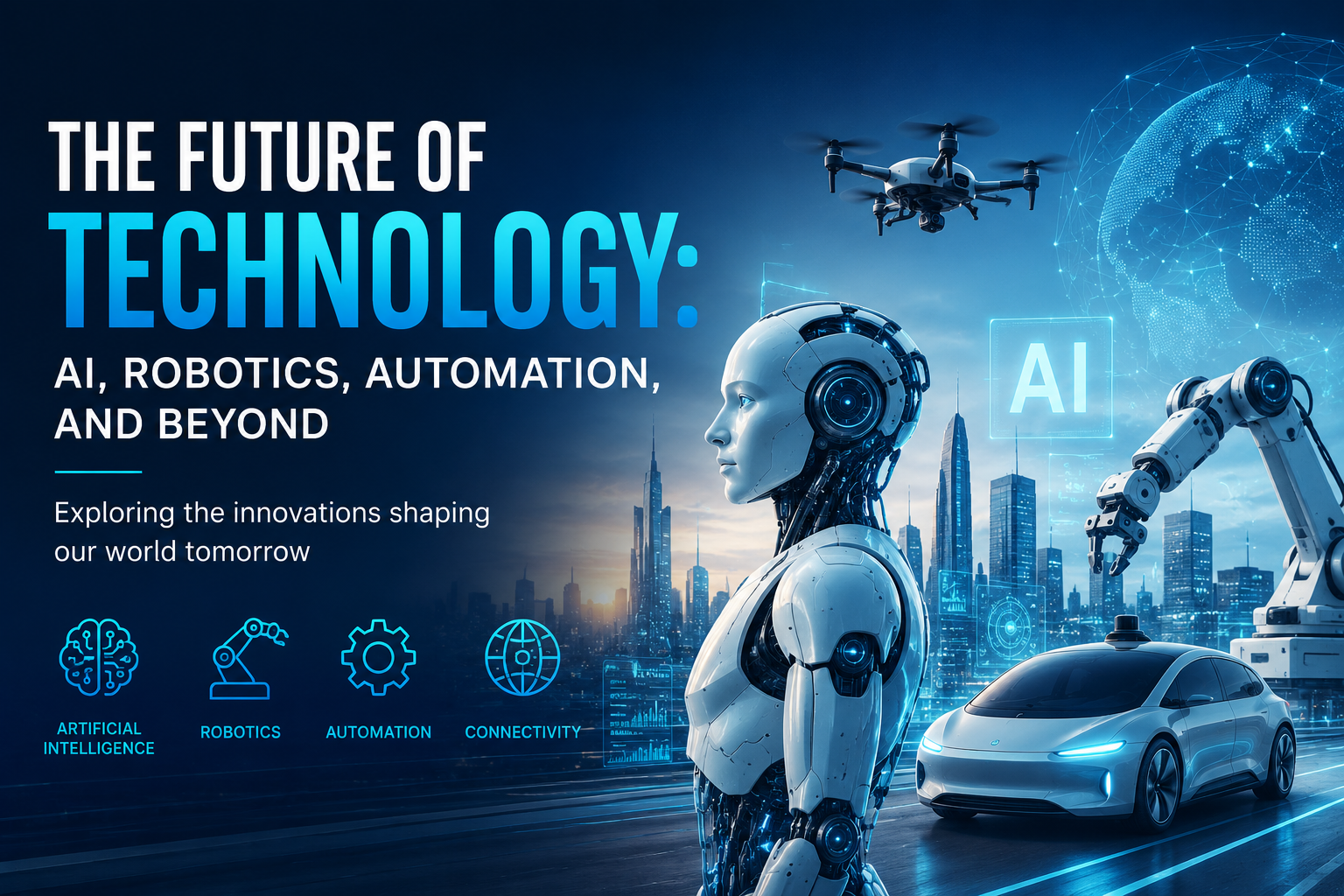
Technology is changing faster than ever before. New inventions and digital tools are transforming the way we live, work, learn, and communicate. From Artificial Intelligence (AI) and robotics to automation and smart devices, the future of technology promises exciting opportunities for individuals and businesses alike.
In this article, we will explore how AI, robotics, automation, and other emerging technologies are shaping the future and what we can expect in the coming years.
What Is the Future of Technology?
The future of technology refers to the innovations and advancements that will improve our daily lives and solve complex problems. Technologies that once seemed like science fiction are now becoming part of everyday life.
Today, we can already see the impact of:
- Artificial Intelligence (AI)
- Robotics
- Automation
- Internet of Things (IoT)
- 5G Networks
- Blockchain Technology
- Virtual Reality (VR) and Augmented Reality (AR)
These technologies are expected to become even more powerful and widespread in the future.
The Growing Role of Artificial Intelligence (AI)
Artificial Intelligence (AI) is one of the most important technologies of our time. AI enables computers and machines to perform tasks that normally require human intelligence, such as learning, problem-solving, and decision-making.
How AI Is Changing the World
AI is already being used in:
- Virtual assistants like Siri and Google Assistant
- Customer service chatbots
- Healthcare diagnosis
- Online shopping recommendations
- Fraud detection in banking
- Self-driving vehicle research
In the future, AI will become more advanced and help businesses improve efficiency, reduce costs, and deliver better customer experiences.
How Robotics Is Transforming Industries
Robotics involves the design and use of machines that can perform tasks automatically. Robots are becoming smarter, faster, and more capable thanks to advances in AI and machine learning.
Industries Using Robotics
Robots are widely used in:
- Manufacturing
- Healthcare
- Warehousing
- Agriculture
- Logistics
- Space exploration
For example, robotic systems can assemble products in factories, assist surgeons during medical procedures, and help farmers monitor crops more efficiently.
As technology improves, robots will work alongside humans in many industries, increasing productivity and safety.
The Rise of Automation
Automation is the process of using technology to perform tasks with minimal human intervention. Businesses around the world are adopting automation to save time and improve accuracy.
Benefits of Automation
Some major benefits include:
- Increased efficiency
- Reduced operational costs
- Fewer human errors
- Faster production
- Improved customer service
Automation is already being used in manufacturing, banking, healthcare, retail, and transportation. In the future, more routine tasks will be automated, allowing workers to focus on creative and strategic activities.
The Internet of Things (IoT) and Smart Living
The Internet of Things (IoT) connects devices to the internet, allowing them to communicate and share data.
Examples of IoT devices include:
- Smart home systems
- Smart thermostats
- Fitness trackers
- Connected vehicles
- Smart security cameras
IoT technology will continue to make homes, cities, and workplaces more efficient and convenient. Smart devices will help people save energy, improve security, and manage daily activities more effectively.
The Impact of 5G Technology
5G technology is the next generation of mobile communication. It offers faster internet speeds, lower latency, and better connectivity than previous networks.
Advantages of 5G
- Faster downloads and uploads
- Better video streaming
- Improved online gaming
- Enhanced remote work experiences
- Support for smart cities and autonomous vehicles
As 5G networks expand globally, they will support the growth of AI, robotics, and IoT applications.
Virtual Reality and Augmented Reality
Virtual Reality (VR) and Augmented Reality (AR) are creating new ways for people to interact with digital content.
These technologies are being used in:
- Education
- Gaming
- Healthcare
- Real estate
- Employee training
In the future, VR and AR may become common tools for learning, shopping, collaboration, and entertainment.
Challenges of Future Technologies
While technological advancements bring many benefits, they also create challenges.
Some concerns include:
- Data privacy issues
- Cybersecurity threats
- Job displacement due to automation
- Ethical use of AI
- Digital inequality
Governments, businesses, and technology companies must work together to ensure these innovations are used responsibly and safely.
What the Future Holds
The future of technology will be driven by innovation, connectivity, and intelligent systems. AI-powered tools, advanced robotics, smart devices, and automation will continue to transform industries and improve quality of life.
People who stay informed and develop technology-related skills will be better prepared for future opportunities. Businesses that embrace digital transformation will also gain a competitive advantage in the rapidly evolving marketplace.
Conclusion
The future of technology is exciting and full of possibilities. Artificial Intelligence, robotics, automation, IoT, 5G, and immersive technologies are changing the world at an incredible pace. These innovations will help solve problems, improve efficiency, and create new opportunities across industries.
While challenges remain, the continued growth of technology has the potential to make our lives smarter, safer, and more connected than ever before.
Frequently Asked Questions (FAQs)
1. What is the future of technology?
The future of technology includes advancements in AI, robotics, automation, IoT, 5G, blockchain, and other innovations that will improve how people live and work.
2. How will Artificial Intelligence impact the future?
AI will automate tasks, improve decision-making, enhance customer experiences, and support innovation across industries such as healthcare, finance, and education.
3. Will robots replace human workers?
Robots may automate some repetitive tasks, but they are also expected to create new job opportunities and work alongside humans in many industries.
4. What are the benefits of automation?
Automation increases efficiency, reduces costs, minimizes errors, and helps businesses improve productivity and customer service.
5. Why is 5G important for future technology?
5G provides faster internet speeds and better connectivity, supporting technologies such as AI, smart cities, autonomous vehicles, and IoT devices.
