


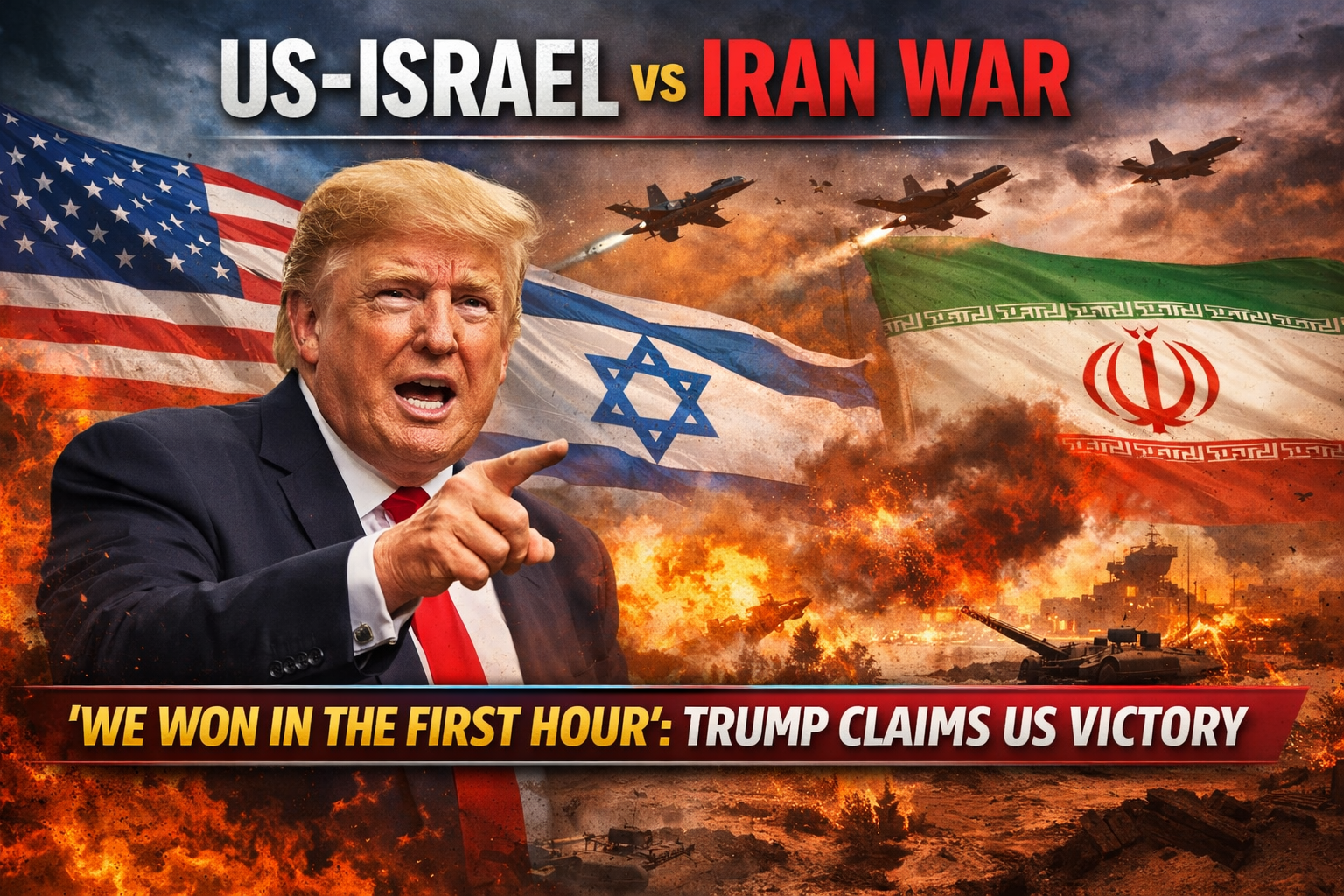
The conflict between the United States, Israel, and Iran has become one of the most serious geopolitical crises in recent years. The latest developments have drawn worldwide attention after former US President Donald Trump claimed that the United States had already “won” the war against Iran within the first hour of the military campaign. The statement has sparked debates among global leaders, analysts, and citizens about the real situation on the ground.
In this article, we will explore the latest updates on the US-Israel vs Iran war, the background of the conflict, Trump’s controversial statement, the military developments, and the potential global impact.
Background of the US-Israel vs Iran Conflict
Tensions between the United States, Israel, and Iran have existed for decades. The conflict intensified due to several issues, including Iran’s nuclear program, regional power struggles in the Middle East, and ideological differences between the countries.
In recent years, both the United States and Israel have accused Iran of developing nuclear weapons and supporting militant groups across the Middle East. Iran has denied these accusations and claims that its nuclear program is intended for peaceful purposes.
The current war escalated after a series of military operations and retaliatory attacks between the countries. In February 2026, the United States and Israel launched a large-scale military operation against Iran targeting missile bases, air defense systems, and military facilities.
These attacks marked a major turning point in the Middle East crisis and triggered a broader regional conflict.
Trump Claims the War Was Won “In the First Hour”
One of the most widely discussed statements about the war came from Donald Trump. Speaking at a rally in Kentucky, Trump said that the United States had effectively won the war against Iran almost immediately after the first military strikes.
According to Trump:
“You never like to say too early you won. We won. In the first hour it was over.”
He claimed that US forces destroyed a large portion of Iran’s naval capability during the early stages of the conflict. Trump stated that American forces knocked out dozens of Iranian naval ships and caused significant damage to Iran’s military infrastructure.
However, Trump also clarified that the United States would continue its military operations until the mission was fully completed.
Major Military Operations in the Conflict
The US-Israel coalition launched several coordinated attacks across Iran. These operations targeted key military and nuclear facilities believed to be linked to Iran’s missile and nuclear programs.
Key targets included:
- Missile launch sites
- Military bases
- Air defense systems
- Nuclear enrichment facilities
- Command and control centers
Earlier military operations also involved strikes on major nuclear sites such as Fordow, Natanz, and Isfahan.
The objective of these operations was to weaken Iran’s military capabilities and prevent the country from developing nuclear weapons.
Iran’s Response to the Attacks
Iran responded strongly to the US-Israel strikes. The Iranian government accused the United States and Israel of violating international law and threatening regional stability.
Iran launched missile attacks targeting US military bases and allied positions in the Middle East. Some of these attacks targeted bases in Qatar and other regional locations.
Despite these retaliatory strikes, US officials claimed that the damage caused by Iranian attacks was limited.
The situation has remained highly volatile, with both sides continuing military operations and preparing for further escalation.
Rising Tensions Across the Middle East
The conflict has also increased tensions across the Middle East. Several countries in the region have expressed concern that the war could spread to other parts of the region.
Possible risks include:
- Expansion of the war to neighboring countries
- Attacks on oil shipping routes in the Persian Gulf
- Increased terrorism and proxy conflicts
- Disruption of global energy supplies
The Strait of Hormuz, one of the world’s most important oil transportation routes, has become a key strategic concern during the conflict.
Any disruption in this region could affect global oil prices and international trade.
Global Reactions to the War
The war has received mixed reactions from global leaders and international organizations.
Some countries have expressed support for the United States and Israel, arguing that Iran’s nuclear ambitions pose a serious threat to global security.
However, other nations have criticized the military operations and called for diplomatic negotiations instead of war.
International organizations such as the United Nations have urged all sides to avoid further escalation and work toward a peaceful solution.
Many experts believe that diplomatic talks may be the only way to prevent the conflict from turning into a larger regional war.
Impact on the Global Economy
The US-Israel vs Iran war could have serious economic consequences around the world.
One of the biggest concerns is the impact on oil prices. The Middle East produces a large portion of the world’s oil supply, and any disruption in the region can lead to higher energy costs.
Possible economic effects include:
- Rising global oil prices
- Increased inflation
- Disruption in international trade
- Stock market volatility
Energy markets have already shown signs of instability as investors react to the ongoing conflict.
Humanitarian Concerns
Wars often cause significant humanitarian crises, and the US-Israel vs Iran conflict is no exception.
Reports indicate that many civilians have been affected by the fighting. Cities and military facilities have been targeted in airstrikes, leading to destruction and displacement.
Human rights organizations have expressed concern about civilian casualties and the humanitarian impact of the war.
Aid organizations are urging both sides to protect civilian populations and allow humanitarian assistance to reach affected areas.
What Could Happen Next?
The future of the conflict remains uncertain. Several scenarios are possible depending on how the situation develops.
Possible outcomes include:
1. Continued Military Escalation
If both sides continue launching attacks, the conflict could grow into a larger regional war.
2. Diplomatic Negotiations
International pressure could push the countries toward peace talks and negotiations.
3. Temporary Ceasefire
A temporary ceasefire could help reduce tensions and allow time for diplomatic solutions.
4. Long-Term Strategic Conflict
Even if the war slows down, tensions between Iran, Israel, and the United States could continue for many years.
Conclusion
The US-Israel vs Iran war has become one of the most important geopolitical crises in the world today. Donald Trump’s claim that the United States won the war “in the first hour” has added another layer of controversy to an already complex conflict.
While US officials highlight early military successes, the situation on the ground remains uncertain and highly volatile. The conflict continues to impact global politics, energy markets, and international security.
Many world leaders are calling for diplomatic solutions to prevent further escalation and reduce the risk of a wider war in the Middle East.
The coming weeks will likely determine whether the crisis moves toward peace negotiations or deeper military confrontation.
FAQs
1. Why did the US and Israel attack Iran?
The United States and Israel say the attacks targeted Iran’s missile and nuclear programs to prevent the country from developing nuclear weapons.
2. What did Donald Trump say about the Iran war?
Trump claimed that the United States had already won the war within the first hour of military strikes but said US forces would stay until the mission is completed.
3. How did Iran respond to the attacks?
Iran launched missile and drone attacks against US bases and allied positions in the Middle East.
4. Could the conflict become a larger regional war?
Yes, experts warn that the conflict could expand if more countries become involved or if attacks continue.
5. How will the war affect global oil prices?
The conflict could disrupt oil supply routes in the Middle East, potentially increasing global oil prices and affecting the world economy.
