


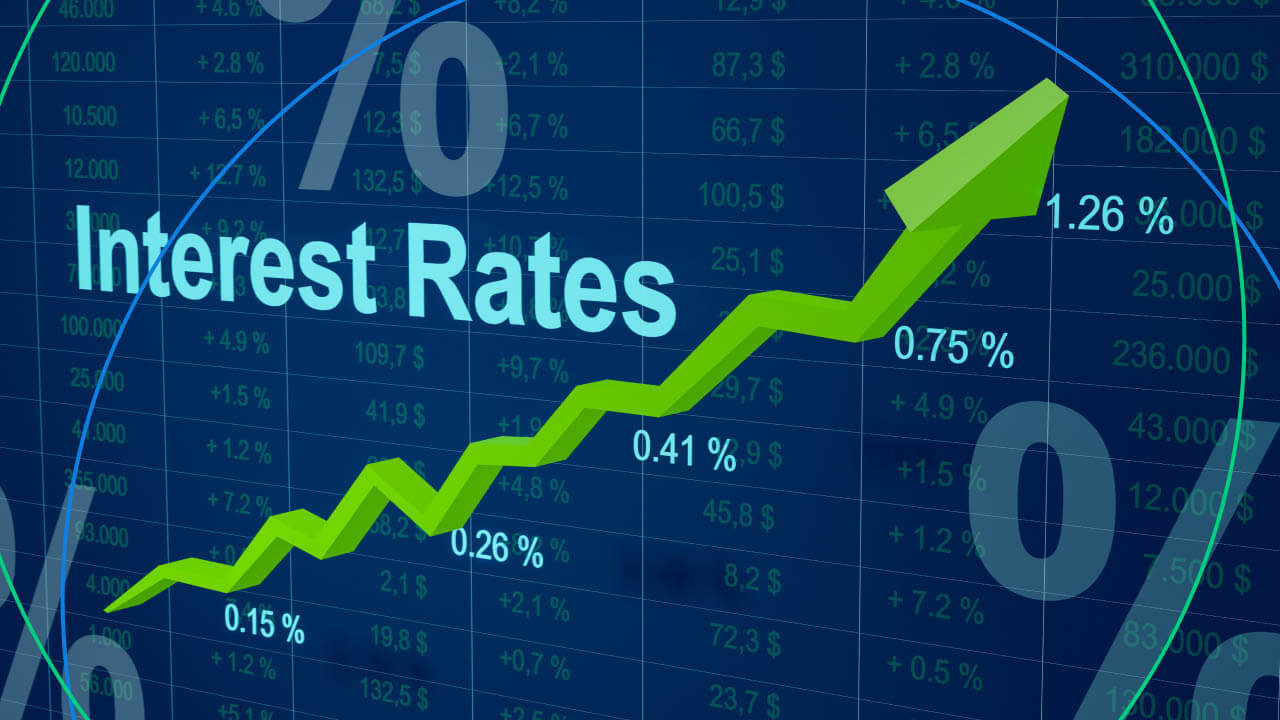
Interest rates are one of the most powerful forces shaping stock market behavior, yet their influence is often misunderstood. Investors tend to focus on whether rates are “up” or “down,” but the relationship between interest rates and stock performance is more nuanced. Rate changes affect valuations, corporate profits, investor behavior, and sector performance in ways that unfold over time rather than instantly.
At the most basic level, interest rates represent the cost of money. When rates are low, borrowing becomes cheaper for businesses and consumers. Companies can finance expansion, acquisitions, and research at lower cost, while consumers are more likely to spend on homes, cars, and discretionary goods. This environment tends to support economic growth, which often benefits equities.
Lower interest rates also affect how stocks are valued. Equity prices are fundamentally based on expectations of future cash flows. When rates fall, the discount rate applied to those future earnings declines, making future profits more valuable in today’s terms. This effect tends to lift stock valuations, particularly for companies expected to generate most of their earnings further in the future.
When interest rates rise, the opposite dynamics come into play. Borrowing costs increase, reducing corporate profitability and slowing investment. Consumers face higher costs on mortgages, credit cards, and loans, which can dampen spending. From a valuation perspective, higher discount rates reduce the present value of future earnings, putting downward pressure on stock prices.
However, rising rates are not automatically bad for stocks. The reason rates are increasing matters. If rates rise because the economy is strong and inflation is under control, corporate revenues may grow fast enough to offset higher borrowing costs. In such cases, stock markets can continue to perform well even as rates climb.
Sector performance is particularly sensitive to interest rate changes. Growth-oriented sectors such as technology and biotech tend to benefit most from low rates because their valuations rely heavily on future earnings. When rates rise, these sectors often experience sharper declines as valuations compress.
By contrast, value-oriented sectors such as financials, energy, and industrials can perform better in higher-rate environments. Banks, for example, may benefit from wider interest margins, while energy and industrial firms often gain from stronger economic activity that accompanies rate hikes.
Dividend-paying stocks are also affected. When interest rates are low, income-seeking investors often turn to dividend stocks as an alternative to bonds. As rates rise, bonds become more attractive, which can reduce demand for dividend-focused equities and pressure their prices.
Investor psychology plays a role as well. Markets tend to react not just to rate changes, but to expectations about future policy. If investors believe rates will continue rising aggressively, uncertainty increases and risk appetite declines. Conversely, signals that rates may stabilize or fall often spark rallies, even before any actual policy change occurs.
It is also important to distinguish between short-term market reactions and longer-term effects. Stock markets often respond immediately to interest rate announcements, but the full economic impact unfolds gradually. Companies may take months or years to adjust capital spending, hiring, and pricing strategies.
For retail investors, the key takeaway is that interest rates should be viewed as part of a broader context. Rates influence stock performance through multiple channels, and their impact varies across sectors and time horizons. Rather than reacting emotionally to rate headlines, investors are better served by understanding how rate changes affect the specific companies and industries they own.
