


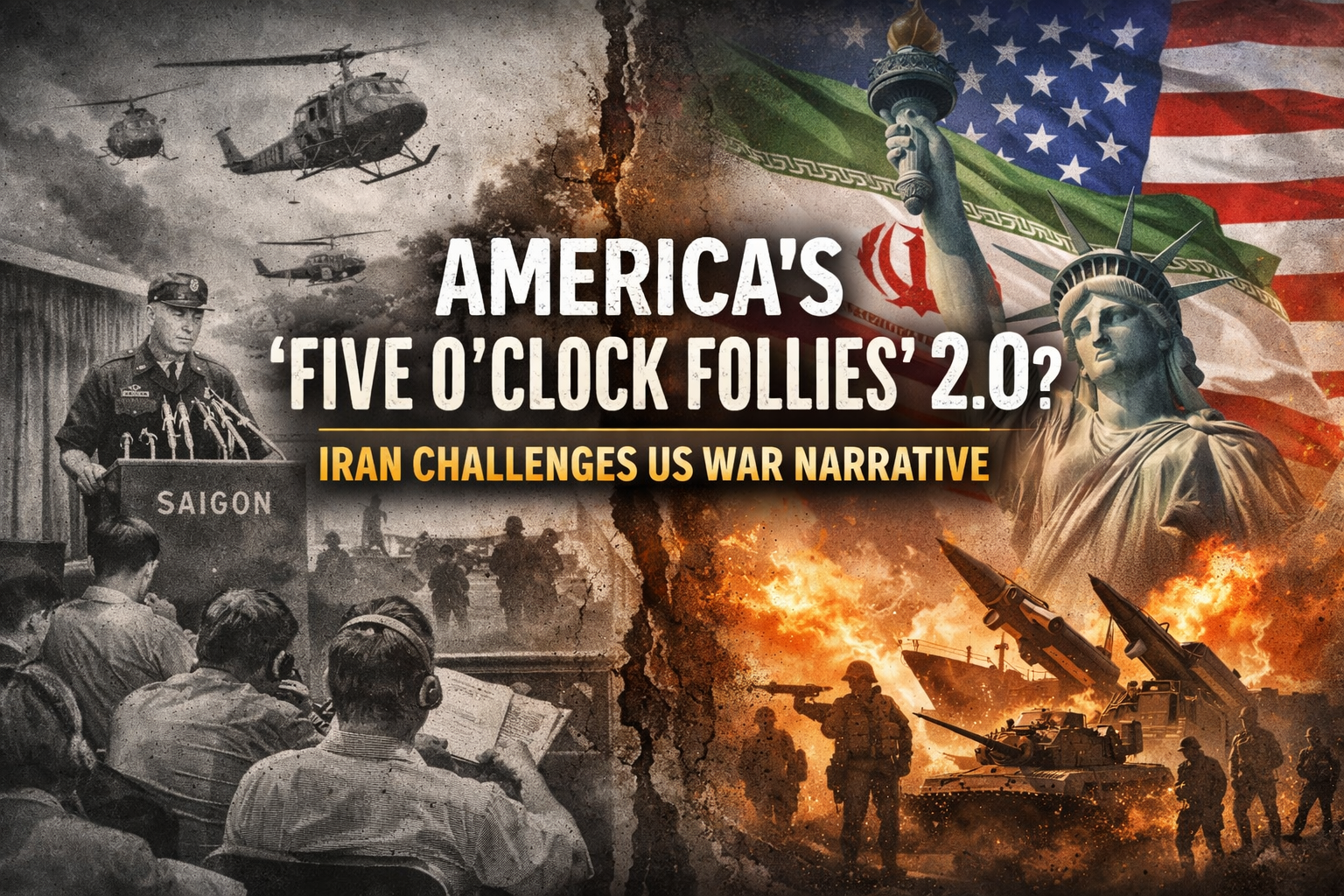
In recent global tensions, a strong war of words has emerged between the United States and Iran. Iran has sharply criticized the U.S. narrative about ongoing conflicts, comparing it to a controversial moment from history known as the “Five O’Clock Follies.” This comparison has sparked debate worldwide, raising questions about truth, propaganda, and how wars are presented to the public.
In this blog, we will understand what this comparison means, why Iran is using it, and what lessons history can teach us today.
What Were the ‘Five O’Clock Follies’?
The term “Five O’Clock Follies” comes from the Vietnam War. It referred to daily U.S. military press briefings that were held in the afternoon.
Five O’Clock Follies
These briefings were often criticized by journalists because they presented an overly positive view of the war, even when the reality on the ground was very different. Many reporters believed there was a “credibility gap” between what the government said and what was actually happening.
Over time, this term became a symbol of government propaganda and misinformation during wartime.
Iran’s Strong Reaction to US Claims
Recently, Iranian officials accused the U.S. of repeating the same pattern seen during the Vietnam War. According to reports, Iran’s foreign minister said that U.S. leaders are presenting an unrealistic picture of success in the conflict.
He compared current U.S. statements to the Vietnam-era briefings, suggesting that:
- The U.S. claims success publicly
- Reality on the battlefield tells a different story
- The gap between truth and narrative is growing
This sharp criticism is not just political—it is also a strategic communication move.
Why Vietnam War Comparisons Matter
The Vietnam War is one of the most important lessons in modern history. The U.S. entered the war with strong confidence but eventually faced defeat and withdrawal.
Vietnam War
Key lessons from the Vietnam War include:
- Public trust can be damaged if information is misleading
- Media plays a big role in shaping public opinion
- Long wars without clear results can weaken support
Iran is using this historical reference to suggest that the U.S. might be repeating past mistakes.
The Role of Media and War Narratives
In today’s digital world, information spreads faster than ever. Governments, media, and social platforms all influence how people understand conflicts.
Iran’s comparison highlights an important issue:
👉 Who controls the narrative?
During the Vietnam War, journalists eventually exposed the gap between official statements and reality. Today, with social media and independent reporting, it is even harder to control information completely.
This creates a complex situation where:
- Different countries present different versions of the same events
- People may struggle to find the truth
- Propaganda can still influence public opinion
Is This Really ‘Follies 2.0’?
The idea of “Five O’Clock Follies 2.0” suggests that history might be repeating itself. But is that really the case?
There are similarities:
- Conflicting claims about war progress
- Accusations of misinformation
- Global attention and media coverage
However, there are also differences:
- Today’s media is more decentralized
- Information is harder to control
- Public scrutiny is stronger than before
So while the comparison is powerful, the situation is not exactly the same.
Global Impact of This Narrative Clash
This war of narratives has effects beyond just the U.S. and Iran. It impacts:
🌍 International Relations
Countries may take sides based on which narrative they believe.
📉 Public Trust
People may lose trust in governments if they feel misled.
📰 Media Credibility
Journalists face pressure to report accurately in a complex environment.
What Can We Learn From History?
History often repeats itself, but it also teaches valuable lessons. From the Vietnam War and today’s situation, we can learn:
- Transparency is important during conflicts
- Governments should provide accurate information
- Media must question official narratives
- Citizens should stay informed and think critically
Conclusion
The comparison of current events to the “Five O’Clock Follies” is more than just a political statement. It is a reminder of how powerful narratives can shape public opinion during war.
Iran’s criticism of the U.S. highlights ongoing concerns about truth, transparency, and trust. Whether or not this is truly “Follies 2.0,” one thing is clear: history continues to influence how we understand modern conflicts.
FAQs
1. What does ‘Five O’Clock Follies’ mean?
It refers to U.S. military press briefings during the Vietnam War that were criticized for being misleading.
2. Why is Iran using this term now?
Iran is comparing current U.S. statements to past propaganda to question their accuracy.
3. What was the main issue during the Vietnam War briefings?
There was a gap between official claims and actual battlefield conditions.
4. Is the current situation similar to Vietnam?
There are some similarities, but modern media and global awareness make it different.
5. Why are war narratives important?
They shape public opinion, influence international relations, and affect trust in governments.
