



By the time most of Tashiba Williams’ patients find her, they have already tried everything else.
They have seen the specialists. They have attended the appointments, or tried to. They have followed the treatment plans, adjusted their medications, changed their dressings, and waited for wounds that refused to heal. Some of them have sat across from a doctor and heard the word amputation spoken not as a distant possibility but as a near certainty. They have gone home and tried to imagine what their lives would look like on the other side of that outcome.
And then, somehow, they find their way to Williams.
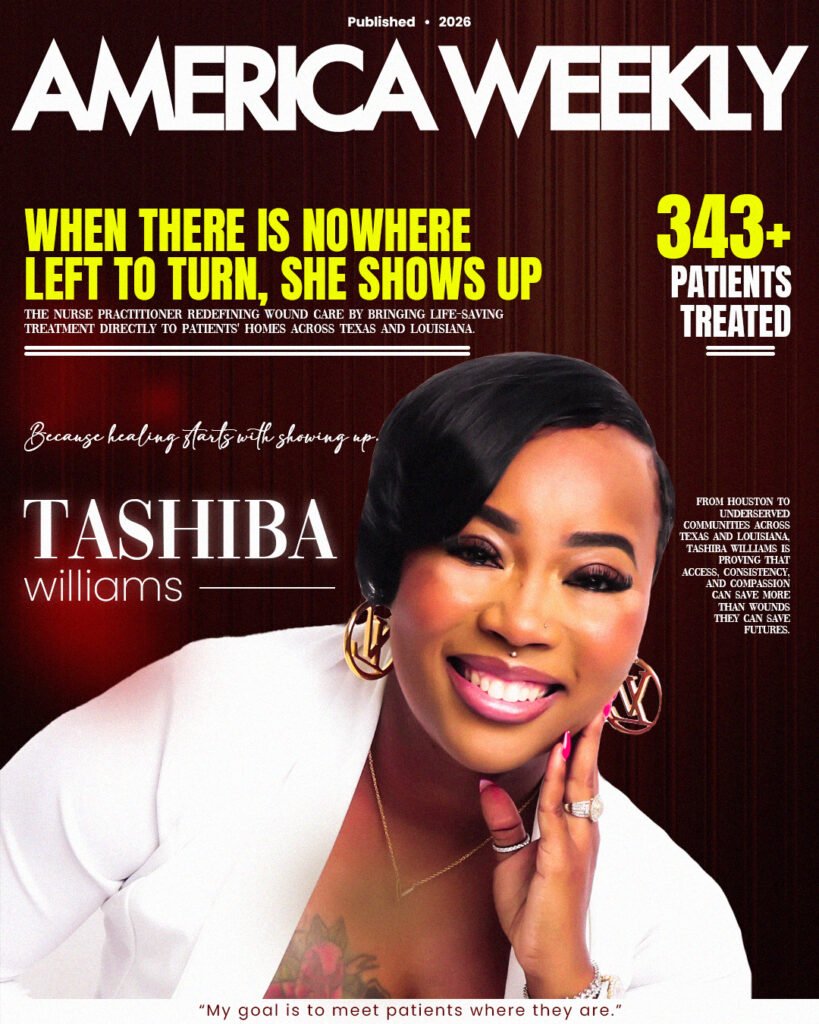
Tashiba Williams, NP-C, is the founder of ADA Family Health Clinic, a mobile wound care and primary care practice based in Houston, Texas. She does not operate out of a gleaming medical complex or a well-appointed specialist office. She operates out of the communities where her patients live, driving to their homes across Texas and Louisiana, showing up at the doors of people who have run out of places to turn and offering them something the system had stopped offering: another chance.
Since launching ADA Family Health Clinic, Williams has treated more than 343 patients across both states. The number that matters most is not the total. It is the ones who were told they would lose a limb and did not.
What the End of the Road Looks Like
To understand why patients arrive at ADA Family Health Clinic as a last resort, it helps to understand what the road before that looks like.
Chronic wounds, including diabetic ulcers, pressure injuries, and vascular wounds, do not deteriorate in dramatic, sudden ways. They worsen gradually, through a combination of inadequate treatment, missed appointments, and the relentless progression of the underlying conditions that made healing difficult in the first place. For patients managing diabetes or vascular disease in communities where specialist access is limited and transportation is unreliable, that gradual worsening happens in the gaps between the care they were supposed to receive and the care they actually got.
Each missed appointment is a missed treatment window. Each missed treatment window is an opportunity for the wound to advance. By the time some patients reach a specialist, the wound has progressed to a stage where the clinical options have narrowed considerably, and the conversation has turned to what can be preserved rather than what can be healed.
That is the moment many of Williams’ patients are living when they first contact her clinic.
“Too often, patients reach the point of amputation simply because they didn’t receive specialized wound care early enough,” Williams said. “My goal is to meet patients where they are, treat wounds aggressively and early, and give them a chance to heal before limb loss becomes the only option.”
The Patient Who Waited a Year
Williams does not have to reach far for an example of what her clinic makes possible. One patient, a man who had been living with a severe chronic wound for years, had tried every intervention available to him before finding his way to ADA Family Health Clinic. Nothing had worked. The wound had not healed. His ability to work had disappeared. His independence had eroded. His family watched him sink into a depression that the wound had made as much of a health crisis as the physical damage itself.
By the time he arrived at Williams’ practice, he had been told there was little reason for optimism. Her clinic was his last resort.
Williams took him on knowing the case would be difficult. She laid out a plan of care and made clear from the beginning that the outcome would depend on both of them.
“I explained to the patient his plan of care and how I would need his help,” Williams recalled. “Meaning for him to do everything I recommended. Together we would get his wound healed.”
It took exactly one year. And then the wound was healed. The man returned to his normal routine, to his work, to his family, to the life that the wound had been slowly taking from him. Williams does not tell that story as a showcase of her own clinical skill. She tells it as a demonstration of what becomes possible when a patient and a provider commit to the process together and when the provider is willing to show up consistently enough to make that commitment real.
Why Last Resorts Exist
The existence of last resorts in healthcare is not accidental. It is the predictable outcome of a system designed around the assumption that patients can reliably navigate their way to care, an assumption that fails consistently for the populations most at risk for chronic wounds.
Chronic wounds affect more than 6 million Americans annually. The conditions that most commonly produce them, diabetes and vascular disease, are among the most prevalent chronic illnesses in the country, and their rates continue to climb. The patients most affected are disproportionately elderly, low-income, and living in communities where the distance between their front door and the nearest specialist is measured not just in miles but in the transportation they do not have, the referral processes that take weeks, and the follow-up appointments that fall apart when life intervenes.
For these patients, the conventional model of wound care, which requires them to travel to a clinic on a regular schedule and navigate a system that was not designed with their circumstances in mind, creates points of failure at every step. Williams built ADA Family Health Clinic to eliminate those points of failure entirely.
The mobile model she developed brings the care to the patient. It removes the transportation barrier. It removes the scheduling friction. It replaces the gaps between visits, during which wounds are unwatched and problems go undetected, with more frequent monitoring and earlier intervention. And it delivers that care in the setting where patients are most likely to remain consistent with treatment: their own homes.
The Difference Consistency Makes
What Williams provides her patients is not a more advanced clinical technique than they could receive elsewhere. It is consistency. It is the reliable presence of a clinician who shows up, assesses the wound, adjusts the treatment plan, educates the patient and their family, and returns. Over and over, in the rhythm that chronic wound management requires to be effective.
That consistency is what the last-resort patients arriving at her clinic have most often been missing. Not medical knowledge. Not the desire to heal. The consistent, specialized attention that turns a wound from something that is progressing toward catastrophe into something that is moving toward closure.
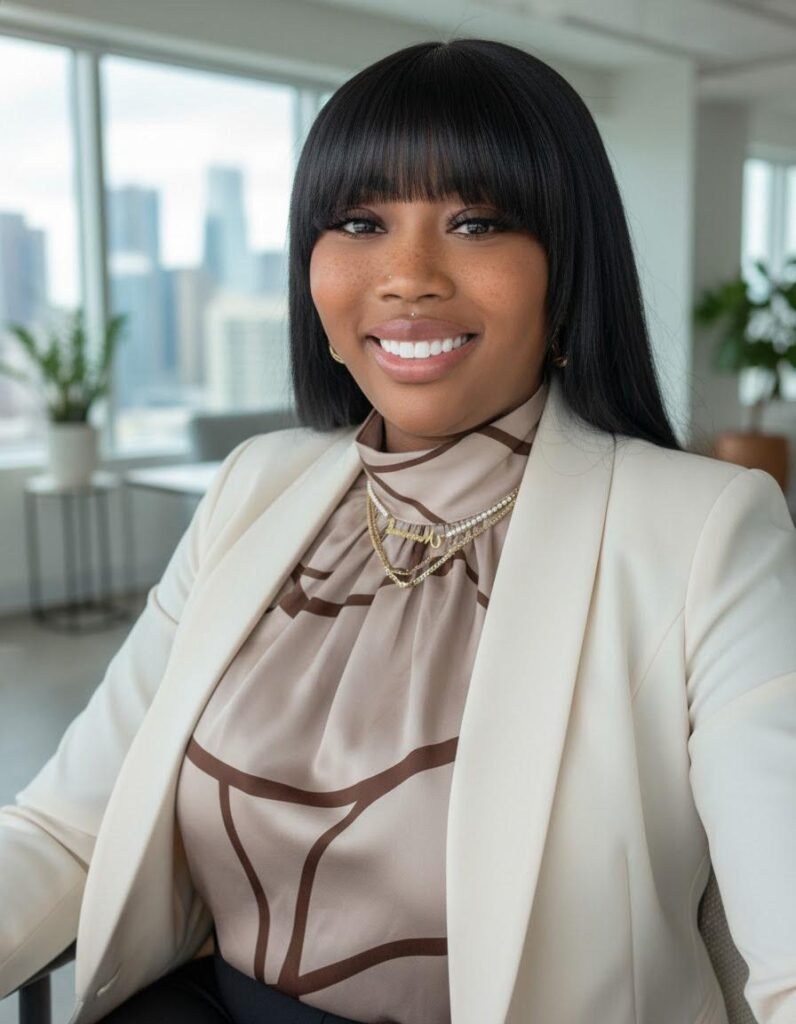
Williams has treated more than 343 patients with that consistency. She has seen what it produces when it is given the time to work. And she has built her entire practice around the conviction that no patient should have to reach a last resort before they receive it.
“My goal is to meet patients where they are,” she said, “and give them a chance to heal before limb loss becomes the only option.”
For the patients who have walked through every other door and found it closed, that chance is everything.
Tashiba Williams, NP-C, is the founder of ADA Family Health Clinic in Houston, Texas. The clinic provides mobile wound care and primary care services to patients across Texas and Louisiana.
