


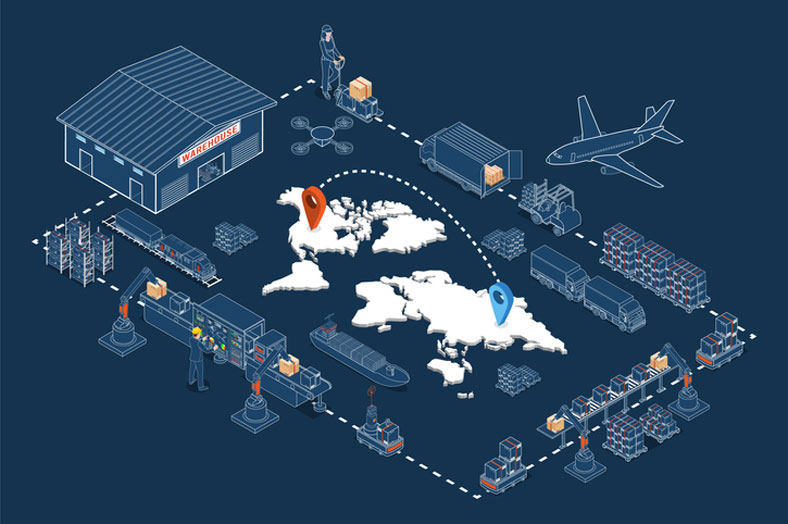
Supply chains play a central role in determining what consumers pay, yet they often remain largely invisible until something goes wrong. From raw materials and manufacturing to transportation and retail, each link in the chain adds cost, time, and vulnerability. When supply chains function smoothly, prices appear stable and predictable. When they are disrupted, the effects quickly reach consumers in the form of higher prices, limited availability, and delayed relief.
At a basic level, a supply chain represents the journey of a product from origin to end user. Raw materials must be extracted or grown, processed into components, assembled into finished goods, transported across regions or borders, stored, and finally sold. Each step involves labor, energy, capital, and coordination. Any increase in cost at one stage can ripple through the entire chain, raising the final price paid by consumers.
Transportation is one of the most visible cost drivers. Shipping goods relies heavily on fuel prices, port efficiency, and logistical capacity. When fuel costs rise, transportation becomes more expensive, and those costs are often passed on. Congestion at ports, shortages of shipping containers, or disruptions in rail and trucking networks can further increase costs by causing delays and inefficiencies. Even small disruptions can have outsized effects when supply chains operate at global scale.
Energy prices influence supply chains beyond transportation. Manufacturing processes often depend on electricity, natural gas, or other energy sources. When energy prices rise, production costs increase, particularly in energy-intensive industries such as chemicals, metals, and food processing. These higher input costs feed into wholesale prices and, eventually, retail prices.
Labor availability is another critical factor. Supply chains rely on workers at every stage, from factory floors to warehouses and delivery routes. Labor shortages can slow production, reduce capacity, and raise wages as companies compete for workers. While higher wages benefit employees, they also increase operating costs, which firms may offset through higher prices. In tight labor markets, these pressures can persist even after demand cools.
Geopolitics adds another layer of complexity. Trade policies, tariffs, sanctions, and conflicts can disrupt established supply routes or limit access to key materials. When suppliers must be replaced or rerouted, costs often rise. Businesses may need to source inputs from more expensive regions or invest in alternative logistics arrangements. These adjustments take time, meaning price increases can linger long after the initial disruption.
One reason supply chain disruptions have such lasting effects is that modern systems are optimized for efficiency rather than resilience. Over the past several decades, companies have embraced just-in-time production, minimizing inventory to reduce costs. While this approach improves efficiency during stable periods, it leaves little room for error. When shocks occur—such as factory shutdowns, natural disasters, or sudden demand spikes—there are few buffers to absorb the impact.
As a result, supply chain disruptions tend to cause prices to rise quickly. Shortages push up wholesale prices, and businesses often respond by increasing retail prices to protect margins. However, when conditions improve, prices do not always fall as quickly. This phenomenon, sometimes referred to as price stickiness, occurs because companies may hesitate to lower prices if costs remain uncertain or if consumers have already adjusted to higher levels.
Consumer experience of supply chain disruptions goes beyond price increases. Reduced availability forces households to change purchasing behavior, substitute products, or delay purchases altogether. Empty shelves or limited options can create frustration and amplify perceptions of inflation, even if overall price indices suggest moderation. The visibility of shortages often matters as much as the magnitude of price changes.
Businesses do not pass on costs uniformly. Large firms with pricing power may absorb some increases temporarily, while smaller businesses with thinner margins may raise prices immediately. This uneven pass-through contributes to variation in consumer experiences across regions and income levels. Essential goods, where demand is less flexible, are especially vulnerable to price increases driven by supply chain stress.
Supply chains also help explain why global events affect local prices. A factory shutdown in one country, a drought affecting agricultural output, or a shipping disruption in a major port can influence prices thousands of miles away. In a highly interconnected global economy, local markets are rarely insulated from distant shocks.
Understanding supply chains provides important insight into inflation dynamics. It explains why prices can rise even when demand is stable, why some goods become more expensive than others, and why relief often takes time. It also highlights the trade-offs policymakers and businesses face between efficiency and resilience.
In recent years, many companies have begun reevaluating supply chain strategies, investing in diversification, nearshoring, and higher inventory levels. These changes may improve stability, but they can also raise baseline costs, influencing prices over the long term. For consumers, this means that supply chain decisions made far upstream continue to shape everyday expenses.
Ultimately, supply chains are not just logistical systems; they are price-setting mechanisms. Their structure, vulnerabilities, and responses to disruption play a decisive role in what consumers pay and why prices behave the way they do.
