



Financial planning is one of the most important steps you can take to secure your future. Many people believe that financial planning is only for wealthy individuals, but that is not true. Everyone can benefit from having a financial plan, regardless of their income level. A good financial plan helps you manage your money, achieve your goals, and prepare for unexpected situations.
In this beginner-friendly guide, you will learn the basics of financial planning and how to create a plan that works for you.
What Is Financial Planning?
Financial planning is the process of managing your money to achieve your short-term and long-term goals. It involves creating a strategy for saving, spending, investing, and protecting your finances.
Some common financial goals include:
- Buying a house
- Starting a business
- Saving for retirement
- Paying off debt
- Building an emergency fund
- Funding your children’s education
A financial plan helps you stay organized and make better financial decisions.
Why Is Financial Planning Important?
Financial planning provides direction and helps you stay in control of your finances. Without a plan, it is easy to overspend and struggle to achieve your goals.
Benefits of financial planning include:
Better Money Management
A financial plan helps you understand where your money is going and how to use it wisely.
Reduced Financial Stress
Knowing that you have a plan can reduce anxiety about money and future expenses.
Goal Achievement
Financial planning helps you stay focused on your goals and create a roadmap to achieve them.
Emergency Preparedness
Unexpected expenses can happen at any time. Financial planning helps you prepare for emergencies.
Wealth Building
A good financial plan includes saving and investing strategies that can help grow your wealth over time.
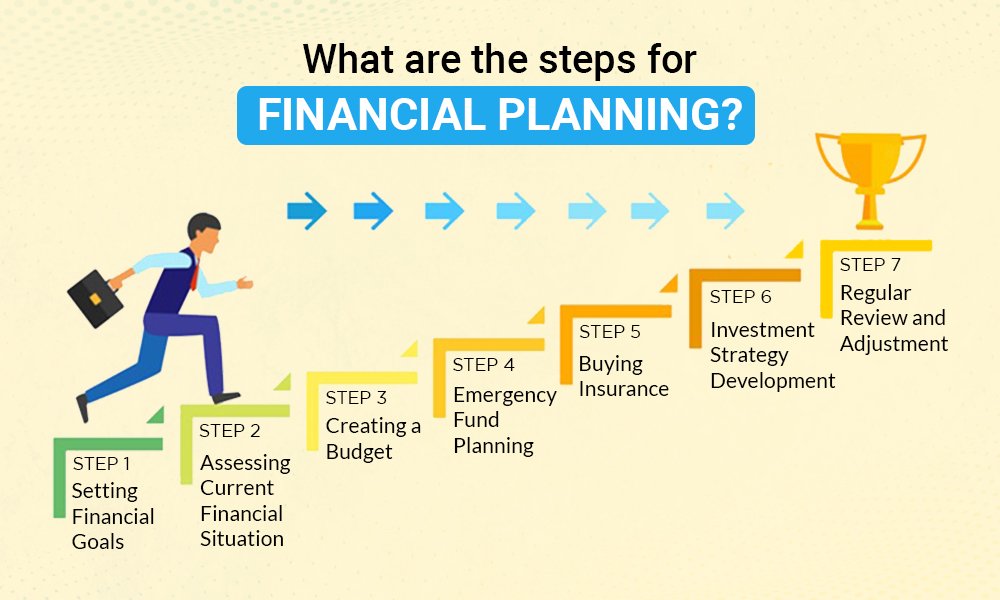
Step 1: Assess Your Current Financial Situation
Before creating a financial plan, you need to understand your current financial position.
Ask yourself:
- How much money do I earn each month?
- What are my monthly expenses?
- How much debt do I have?
- How much money do I currently save?
Make a list of your income, expenses, assets, and liabilities. This will give you a clear picture of your financial health.
Step 2: Set Financial Goals
Financial goals give your plan purpose and direction.
Short-Term Goals
These goals can usually be achieved within one year.
Examples:
- Creating an emergency fund
- Paying off a credit card
- Saving for a vacation
Long-Term Goals
These goals may take several years to achieve.
Examples:
- Buying a home
- Retiring comfortably
- Building investment wealth
Make sure your goals are specific, realistic, and measurable.

Step 3: Create a Budget
A budget is the foundation of financial planning.
Track your income and expenses each month to understand your spending habits.
A simple budgeting rule is the 50/30/20 method:
- 50% for needs (housing, food, bills)
- 30% for wants (entertainment, shopping)
- 20% for savings and investments
A budget helps you avoid unnecessary spending and save more money.
Step 4: Build an Emergency Fund
Life is unpredictable. Medical emergencies, job loss, or unexpected repairs can happen at any time.
An emergency fund acts as a financial safety net.
Experts often recommend saving enough money to cover three to six months of living expenses.
Start small if necessary. Even saving a little each month can make a big difference over time.
Step 5: Pay Off Debt
Debt can slow down your financial progress.
Focus on paying off high-interest debt first, such as credit card balances and personal loans.
Tips for reducing debt:
- Make payments on time
- Avoid taking on unnecessary debt
- Pay more than the minimum amount when possible
- Create a debt repayment plan
Reducing debt allows you to save and invest more effectively.
Step 6: Start Saving and Investing
Saving money is important, but investing can help your money grow faster.
Some beginner-friendly investment options include:
- Mutual funds
- Index funds
- Exchange-Traded Funds (ETFs)
- Retirement accounts
- Stocks
Investing involves risk, so take time to learn about different investment options before getting started.
The earlier you begin investing, the more time your money has to grow through compound returns.
Step 7: Protect Your Finances
Financial planning is not only about making money but also about protecting it.
Consider:
- Health insurance
- Life insurance
- Property insurance
- Disability insurance
Insurance can protect you and your family from major financial losses.
Step 8: Review Your Financial Plan Regularly
Your financial situation and goals may change over time.
Review your financial plan at least once or twice a year.
Update your plan when:
- Your income changes
- You get married
- You have children
- You buy a house
- You change careers
Regular reviews help ensure your financial plan remains effective.
Common Financial Planning Mistakes to Avoid
Many beginners make financial mistakes that can delay their progress.
Avoid these common errors:
- Not having a budget
- Ignoring savings
- Taking on too much debt
- Spending beyond your means
- Delaying investments
- Not having an emergency fund
Learning from these mistakes can improve your financial future.
Conclusion
Financial planning does not have to be complicated. By understanding your finances, setting goals, creating a budget, building savings, reducing debt, and investing wisely, you can create a strong foundation for financial success.
The key is to start today. Even small financial decisions can have a big impact over time. With patience, discipline, and a clear plan, you can achieve your financial goals and enjoy greater financial security.
Frequently Asked Questions (FAQs)
1. What is the first step in financial planning?
The first step is assessing your current financial situation, including your income, expenses, savings, and debts.
2. How much should I save in an emergency fund?
Most financial experts recommend saving three to six months’ worth of living expenses.
3. Why is budgeting important?
Budgeting helps you track your spending, save money, avoid debt, and achieve your financial goals.
4. When should I start investing?
It is best to start investing as early as possible because compound growth can significantly increase your wealth over time.
5. How often should I review my financial plan?
You should review your financial plan at least once or twice a year or whenever a major life event occurs.
