


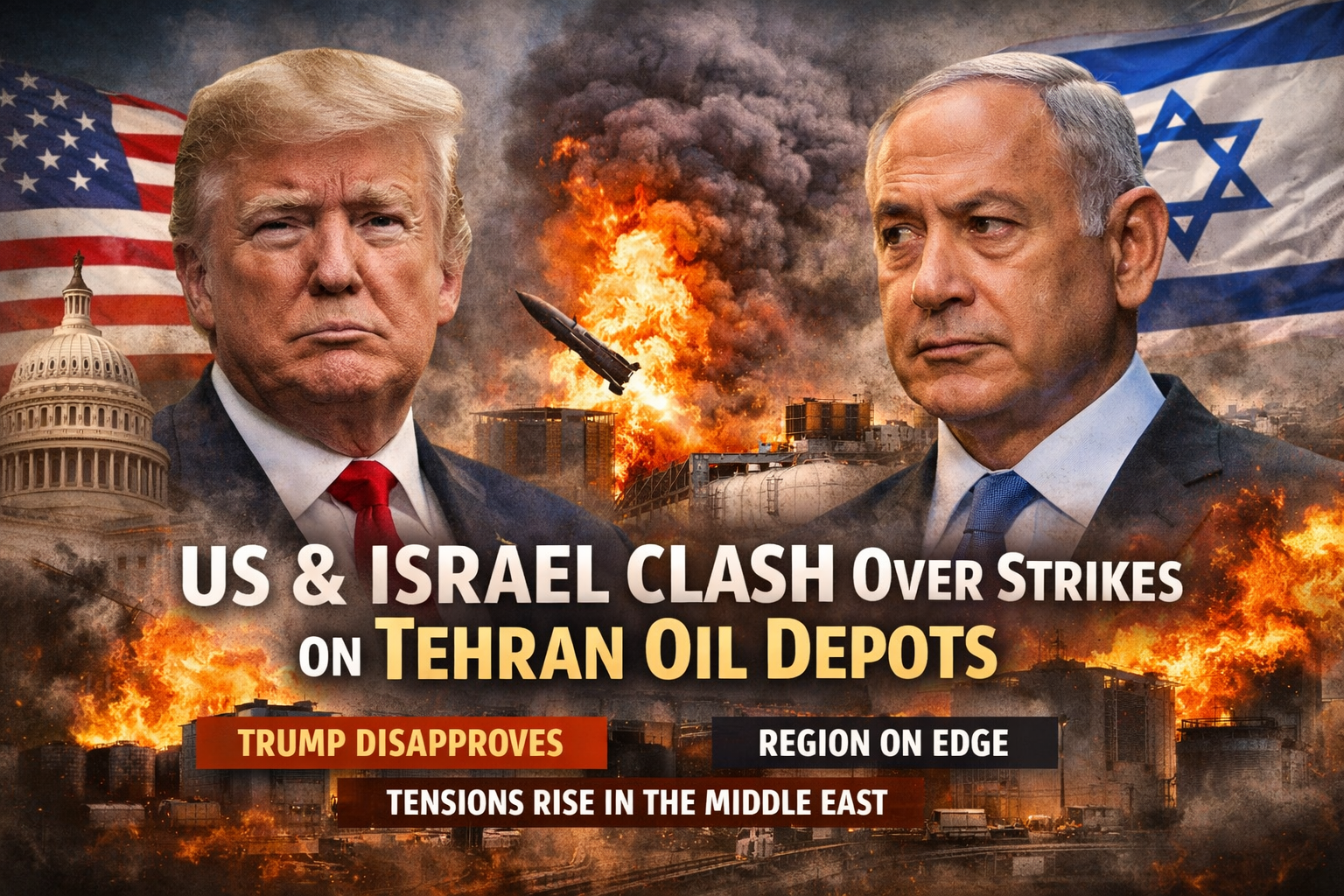
Tensions in the Middle East have increased sharply after Israeli airstrikes targeted oil depots in Tehran, Iran. The attacks caused massive fires, smoke clouds, and concerns about global oil supply. While Israel said the strikes were aimed at weakening Iran’s military capabilities, reports suggest that the United States leadership, including former President Donald Trump, was unhappy with the decision.
This disagreement has created a rare moment of tension between two close allies — the United States and Israel. The situation is also raising fears of a larger regional war and economic disruption worldwide. In this article, we will explain why the strikes happened, why the US is concerned, and what the global consequences might be.
Background: Rising Conflict Between Israel and Iran
For decades, Israel and Iran have been geopolitical rivals in the Middle East. The conflict intensified because of:
- Iran’s nuclear program
- Iran’s support for armed groups in the region
- Israel’s concerns about national security
- Long-standing political tensions between the two nations
In early 2026, the conflict escalated after joint military actions by the US and Israel targeted Iranian infrastructure and military sites.
Iran responded with missile and drone attacks in the region, increasing fears of a broader war.
Israeli Strikes on Tehran Oil Depots
Recently, Israeli forces carried out airstrikes on multiple oil storage facilities in Tehran. According to reports:
- Around 30 fuel depots were targeted
- Huge fires and black smoke covered parts of the Iranian capital
- Some infrastructure supporting Iran’s military fuel supply was destroyed
Israel stated that the fuel facilities were used to support Iran’s military operations. Destroying these depots was meant to limit Iran’s ability to launch missiles and drones.
However, the attack had wider consequences.
Why the US Is Concerned
Despite being Israel’s closest ally, the United States reportedly expressed concern about the strikes.
1. Risk of Higher Global Oil Prices
Iran is one of the world’s major oil producers. Attacking oil infrastructure can disrupt supply and push oil prices higher worldwide.
Experts say that such strikes can:
- increase global fuel prices
- cause inflation in many countries
- disrupt global energy markets
US officials worried that burning oil facilities could lead to higher gasoline prices globally.
This economic risk is one reason Trump reportedly did not support the attack.
2. Risk of Strengthening Iran’s Government
Another concern from the US side is political.
When foreign countries attack critical infrastructure, it sometimes strengthens public support for the targeted government. People may unite against an external threat.
US officials believe the strikes could increase domestic support for Iranian leadership, making diplomatic solutions harder.
3. Risk of Escalating the War
The strikes also increase the risk of retaliation.
Iran has already warned that if its energy infrastructure continues to be targeted, it may respond by attacking oil sites across the region.
This could expand the conflict to:
- Gulf countries
- global shipping routes
- international energy markets
Such escalation could turn the conflict into a wider regional war.
Environmental and Human Impact
The attacks on Tehran’s oil depots also created environmental risks.
Reports said that:
- thick black smoke filled the sky
- toxic rain containing hydrocarbons fell in some areas
- dangerous chemicals spread in the air
Local authorities warned that the smoke could harm lungs, skin, and the environment.
Even though the strike targeted infrastructure, it also affected civilians living near the depots.
Economic Impact Around the World
The conflict is already affecting global markets.
Because the Middle East is a key energy region, even small disruptions can impact the world economy.
Some possible economic effects include:
Rising Oil Prices
Global oil prices increased after the attacks, with crude oil reaching higher levels due to supply fears.
Market Volatility
Stock markets in Asia and Europe showed signs of instability as investors reacted to the growing conflict.
Shipping Risks
The Strait of Hormuz, through which about 20% of global oil trade passes, could become unsafe if tensions escalate.
If this shipping route closes, global energy supply could face major disruption.
Why Israel Carried Out the Attack
From Israel’s perspective, the strikes were a strategic military move.
Israel believes Iran is:
- building stronger missile capabilities
- funding militant groups across the region
- threatening Israeli security
By targeting oil depots used by Iran’s military, Israel hoped to reduce Iran’s operational capacity.
However, the strategy has created diplomatic tensions.
Diplomatic Challenges Between the US and Israel
The United States and Israel normally work closely on Middle East policy.
But this situation highlights a difference in approach.
Israel’s Strategy
- Military pressure
- Direct strikes on strategic infrastructure
US Concerns
- Economic consequences
- Risk of global instability
- Possible escalation of war
This disagreement is considered one of the first major rifts between the allies during the current conflict.
Still, both countries continue to cooperate on broader security goals.
What Could Happen Next
The situation remains uncertain.
Several possible developments could occur:
1. More Israeli Strikes
Israel may continue targeting Iranian military and energy infrastructure.
2. Iranian Retaliation
Iran could attack oil facilities, shipping routes, or military bases in the region.
3. Diplomatic Negotiations
International leaders may push for ceasefire talks.
4. Global Energy Crisis
If oil routes or production are disrupted, fuel prices could rise worldwide.
The coming weeks will be critical for determining whether tensions escalate or calm down.
Conclusion
The Israeli strikes on Tehran oil depots have created a complex situation involving military strategy, global economics, and international diplomacy.
While Israel sees the attacks as necessary for national security, the United States is concerned about economic fallout, political consequences, and the risk of escalating conflict.
The disagreement between these close allies shows how complicated the Middle East situation has become. With rising oil prices, environmental damage, and the threat of retaliation, the world is closely watching how the crisis unfolds.
The next steps taken by Israel, Iran, and the United States will determine whether the region moves toward further conflict or diplomatic resolution.
FAQs
1. Why did Israel attack oil depots in Tehran?
Israel said the depots were used to supply fuel to Iran’s military operations. Destroying them could weaken Iran’s ability to launch attacks.
2. Why is the United States unhappy with the strikes?
US officials worry the attacks could increase global oil prices, strengthen Iran politically, and escalate the war.
3. How could the strikes affect global oil markets?
Damage to oil infrastructure and shipping routes could reduce supply and push oil prices higher worldwide.
4. Could the conflict spread to other countries?
Yes. Iran has warned it may target oil facilities in the region if attacks on its infrastructure continue.
5. Why is the Strait of Hormuz important in this conflict?
About 20% of global oil trade passes through this route. Any disruption there could affect energy supply around the world.
